BIBLIOGRAPHY
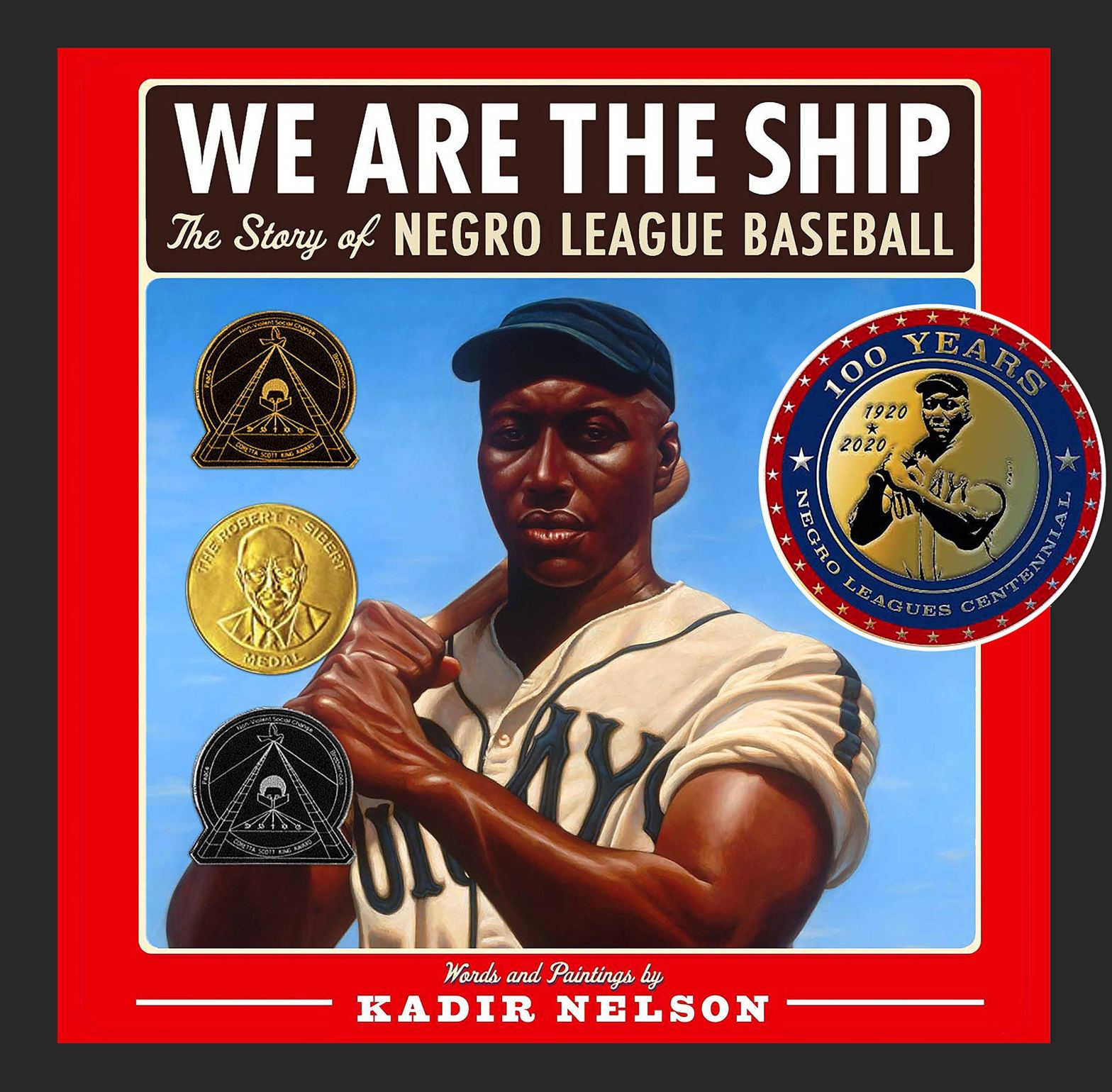
Nelson, Kadir. 2008. We Are the Ship: The Story of Negro League Baseball. Illustrated by Kadir Nelson. New York: Jump at the Sun/Hyperion Books for Children. ISBN: 978-0786808328
PLOT SUMMARY
In nine innings, an old-timer tells the story of Negro League baseball. Readers learn how the league started; the roughness and humor Black players brought to the field; what is was like traveling for the Negro leagues; the cost and maintenance of teams; unrecognized Negro League all-stars; playing in Latin America; Negro Leaguers playing against major league white players; the Negro East-West Classic all-star game; and finally, the effect that Jackie Robinson and Negro players getting signed to the major leagues had on the Negro Leagues.
CRITICAL ANALYSIS
We Are the Ship serves as an introduction to a wealth of Black talent, their passion, loyalty and contribution to the sport, as well as the untold truths about baseball in America. With its creative narrative approach and stellar portraits, Nelson’s non-fiction book is engaging to baseball fans and non-baseball players alike, well into adulthood. Hard facts are buried in the oral history of the Negro Leagues, but readers will not mind, as they are propelled chronologically to find out how Black players made it to the major leagues.
Nelson’s paintings revere the players. From the choice of dark chocolate end papers to the dark faces of players not losing their features under shaded hats, Nelson presents a dignified, classic, and proud portrayal of black skin, in all its shades. The appreciation for baseball is portrayed in the energy, stances, and light in which his subjects bask. The portrait of Negro all star game, with players in their different team jerseys particularly shows the economic disadvantage that marked the Negro Leagues.
Nelson’s text does not blindly romanticize or glorify the players or sport. The book covers a history of 100 years, from the mid 1860’s when official baseball teams only had white players (1), to the closing of the Negro American League in 1960 (77). In the 2nd inning, Nelson reports on the meanness of Negro players like Oscar Charleston and roughness of Negro game play. Unlike the luxury and comfort of today, the 3rd inning accounts the grueling lifestyle Black players had to endure doing what they loved, at a fraction of a white player’s salary. They played multiple times a day, slept on crammed buses, and sometimes were unable to stop for food or restroom breaks due to segregation in the South. In the 4th inning, he mentions the outright illegal finances in which Negro League owners engaged to be able to afford teams.
Despite accepting shortcomings, Nelson commends the contributions Negro League players made to baseball and the country. Rough play meant the adoption of safety equipment as well as made the game more interesting once Black players made the major leagues. The endless season of barnstorming and playing multiple games a day made way for night games before the major league caught on. Racketeering is now played as the lottery. In this realm, Negro League owners, were only keeping up with the immorality of white league owners, who did not pay a dime for Black players once they signed them to the major leagues, for example.
Nelson believes baseball paved the way for nationwide integration. Jackie Robinson made it to the major leagues in 1945 (74), way before the Civil Rights Movement. Despite integrated teams being frowned upon by the likes of Judge Landis, for years Black baseball players had been playing white all-star players. They respected each other and saw each other as men in and off the field. The general public and press looked forward to the East-West Game, the Negro all-star game. A “high class affair” (66), it drew bigger crowds than the white all-star game. Integration meant both the Black and white audiences were going to see Black players, driving the Negro Leagues out of business.
Passion drives baseball, enough to commit league owner Rube Foster to a mental institution and send Jackie Robinson to an early grave. We Are the Ship is a tribute to the men who endured hardships with body and spirit to fulfill their dream of getting paid to do what they loved. Aside from imparting cultural knowledge, it is a testament of the grit and sacrifice needed to succeed, in contrast to the expected comfort, immediacy, and instant gratification that marks our own era.
AWARDS
2010 International Board on Books for Young People (IBBY) Honor List
2010 Odyssey Award, Honor Book, Illustrator
2009 Coretta Scott King Book Award
2009 Robert F. Sibert Informational Book Medal, Winner
2009 Judy Lopez Memorial Award for Children’s Literature
2009 NAACP Image Award, Nominee
2008 Cybils Awards, Finalist
2008 Society of Illustrators Original Art Award, Silver Medal
2008 New York Times Best Illustrated Children’s Book of the Year
2008 Society of School Librarians International Book Awards, Honor Book
REVIEW EXCERPTS
From Booklist: “If the story is the pitch, though, it is the artwork that blasts the book into the stands. Nelson often works from a straight-on vantage point, as if the players took time out of the action to peer at the viewer from history, eyes leveled and challenging, before turning back to the field of play. With enormous blue skies and jam-packed grandstands backing them, these players look like the giants they are.”
From Kirkus: “Along with being absolutely riveted by the art, readers will come away with a good picture of the Negro Leaguers’ distinctive style of play, as well as an idea of how their excellence challenged the racial attitudes of both their sport and their times.”
From School Library Journal: “Adopting the perspective and voice of an elderly ballplayer, [Nelson] offers a readable account that is infused with an air of nostalgic oral history… Nelson’s brilliant, almost iconic paintings vividly complement his account…. An engaging tribute that should resonate with a wide audience and delight baseball fans of all ages.”
CONNECTIONS
–Motley, Bob. 2020. The Negro Baseball Leagues: Tales of Umpiring Legendary Players, Breaking Barriers, and Making American History. A memoir of the “only living arbiter from the Negro Leagues.” Young Adult level. ISBN: 978-1683584001
–Rogosin, Donn. 2020. Invisible Men: Life in Baseball’s Negro Leagues. Originally published in 1983. Offers more depth on the subject in its 342 pages. ISBN: 978-1496223395
–Watch the one-hour film Nelson mentions in his bibliography: There Was Always Sun Shining Someplace: Life in the Negro Baseball Leagues, provided by Reel Film & TV-Classics on YouTube.

 Biblioterika