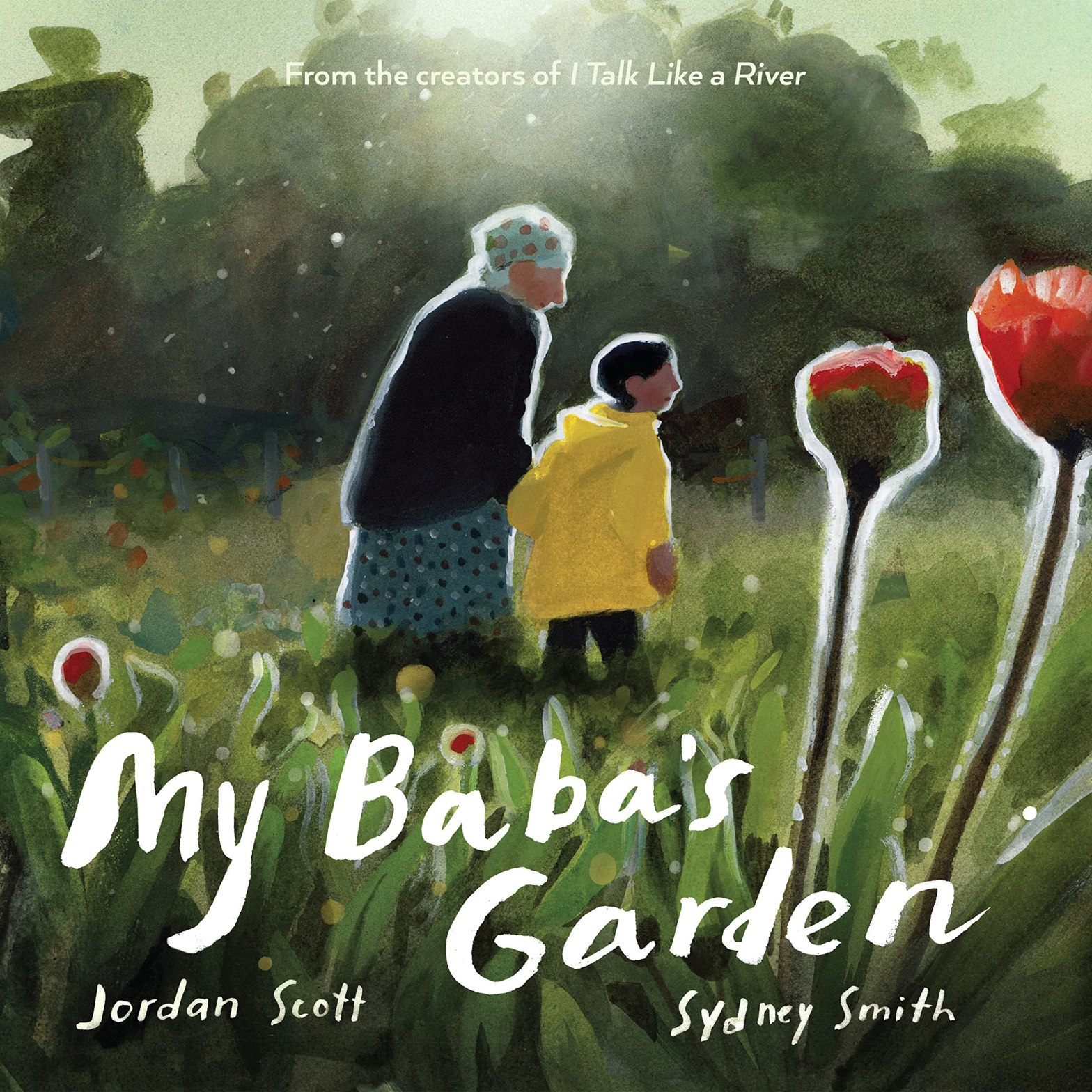
Written by Jordan Scott, illustrated by Sydney Smith

An autobiographical tale featuring a characteristic protagonist such as fiction could never make up. A boy spends another day in his Polish grandmother’s “chicken coop” house. What makes this story stand out are definitely Baba’s peculiarities, from living in a chicken coop remodeled to be a house, to her obsession with preserving food from her luscious garden.
Baba went through traumatizing famine and it shows in her lifestyle. She picks up food that falls from the plate, kisses it, as if blessing it once more for existing, and returns it to her grandson’s plate. She always carries with her a jar full of dirt in case a good opportunity to collect worms arises.
The narrative does not overexplain, which I appreciate. The boy does not feel shame for who his Baba is, but rather, after she becomes ill, takes the responsibility of collecting worms and beginning his own garden. Scott mentions in his author’s note that his children also collect worms, as a tribute to their Baba.
This title embraces intergenerational connection. His father drops off his son “every morning” at Baba’s, likely while the father works. There is scant dialogue, but the language used in the narrative and, especially Smith’s portrayal of touch in even her faceless characters, emit an emotional connection between the two. When Baba falls ill, the grandson’s parents become her main caretakers.
Smith’s artwork carries the softness the narrative needs. The spreads are set in earth tones with vibrant pops of vegetable red, yellow, green. My favorite is the one of her cooking in her kitchen, bathed in window light.
My Baba’s Garden will resonate with immigrant children and children of immigrants. Although difficult to translate word for word, its powerful message will be impressed upon children of all backgrounds. They will relate or at least be curious to the peculiarities of Baba. Baba’s is a distinctive experience that enriches the grandparents-in-literature collection.
Although the title may seem a heavy read, my 3-year-old sat through it, I think mostly because of the illustrations. Older children will definitely have questions about Baba’s habits or offer their own observations about them. This is definitely a book to start conversations and link back to your children’s own grandparents and their experiences.
If you like this duo, they have another book: I Talk Like A River, which talks about a boy with a speech impediment but could also apply to someone learning a new language or has an accent.

 Biblioterika