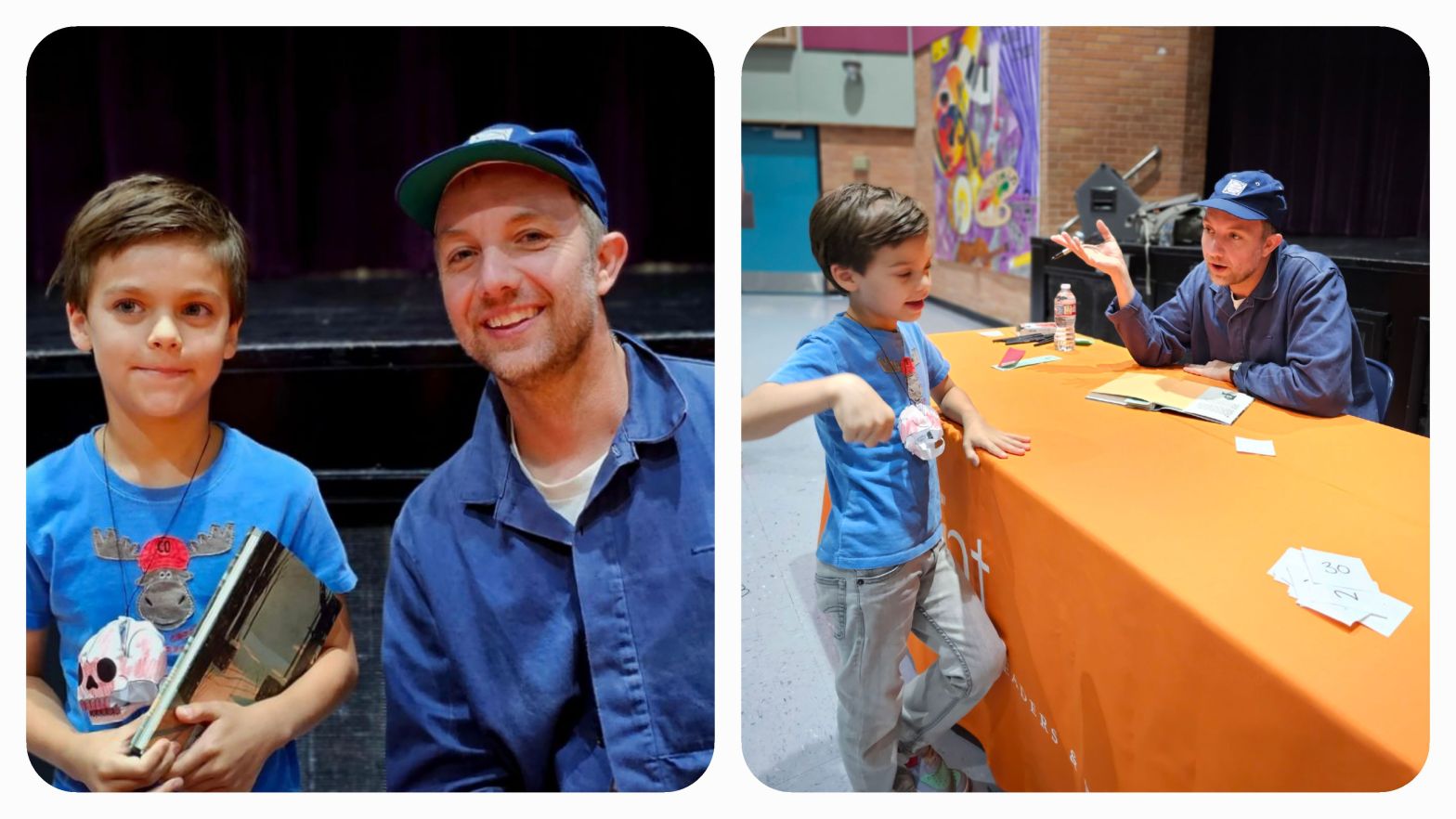
We had the pleasure of seeing Jon Klassen again as part of Inprint’s Cool Brains! Reading series. This series features children and YA authors, and is one of the few series in the nation to focus on children!
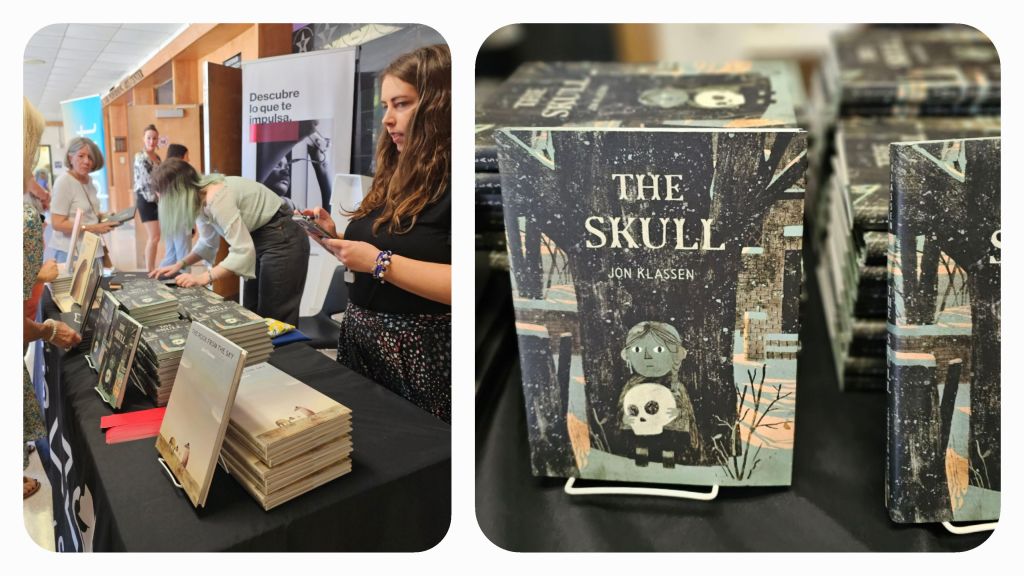
Getting Comfortable
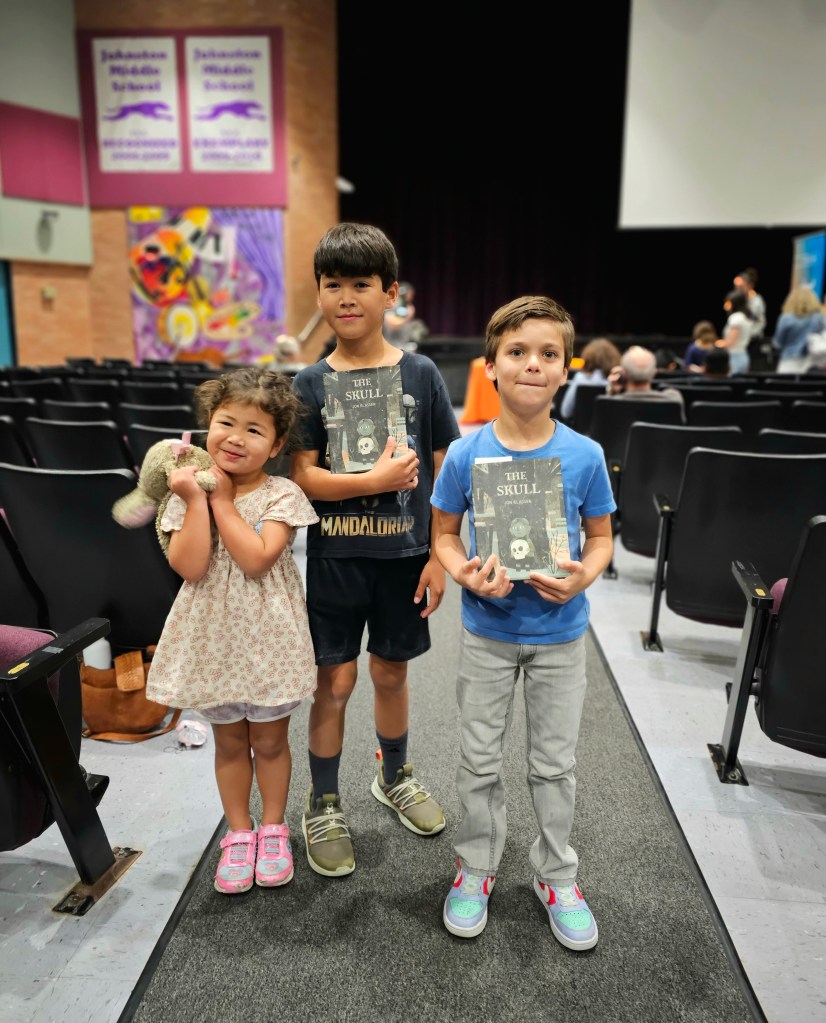
Meyerland Performing and Visual Arts School hosted the event in their spacious auditorium (and parking lot). There was a skull craft the children could participate in while waiting in line. Thanks to sponsors like the Art Alliance of Houston and HEB (per usual, HEB supports so many events in the community, I LOVE HEB!!) we received one of 100 free copies of The Skull and were simultaneously given number 32 to meet the author after the presentation.
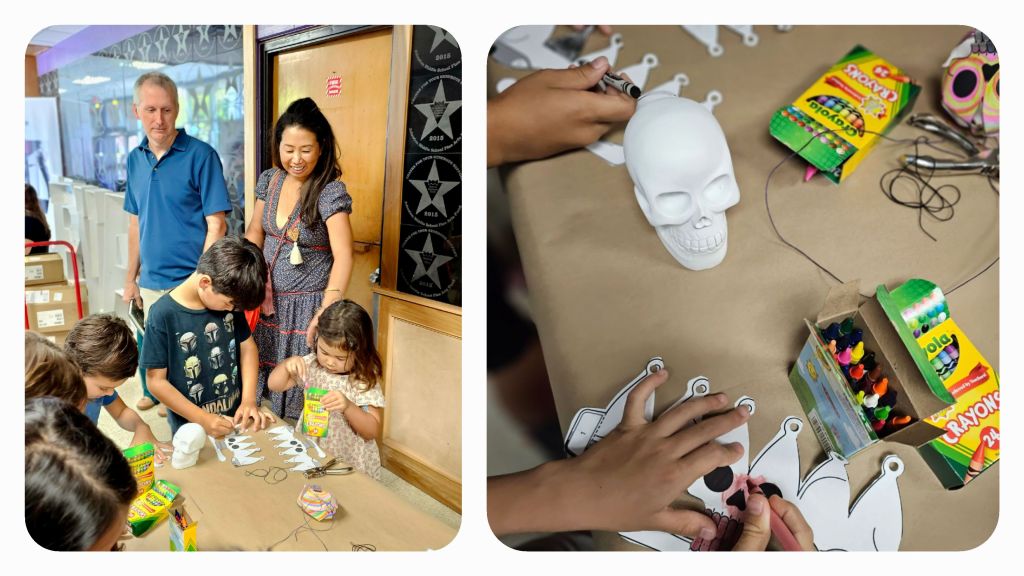
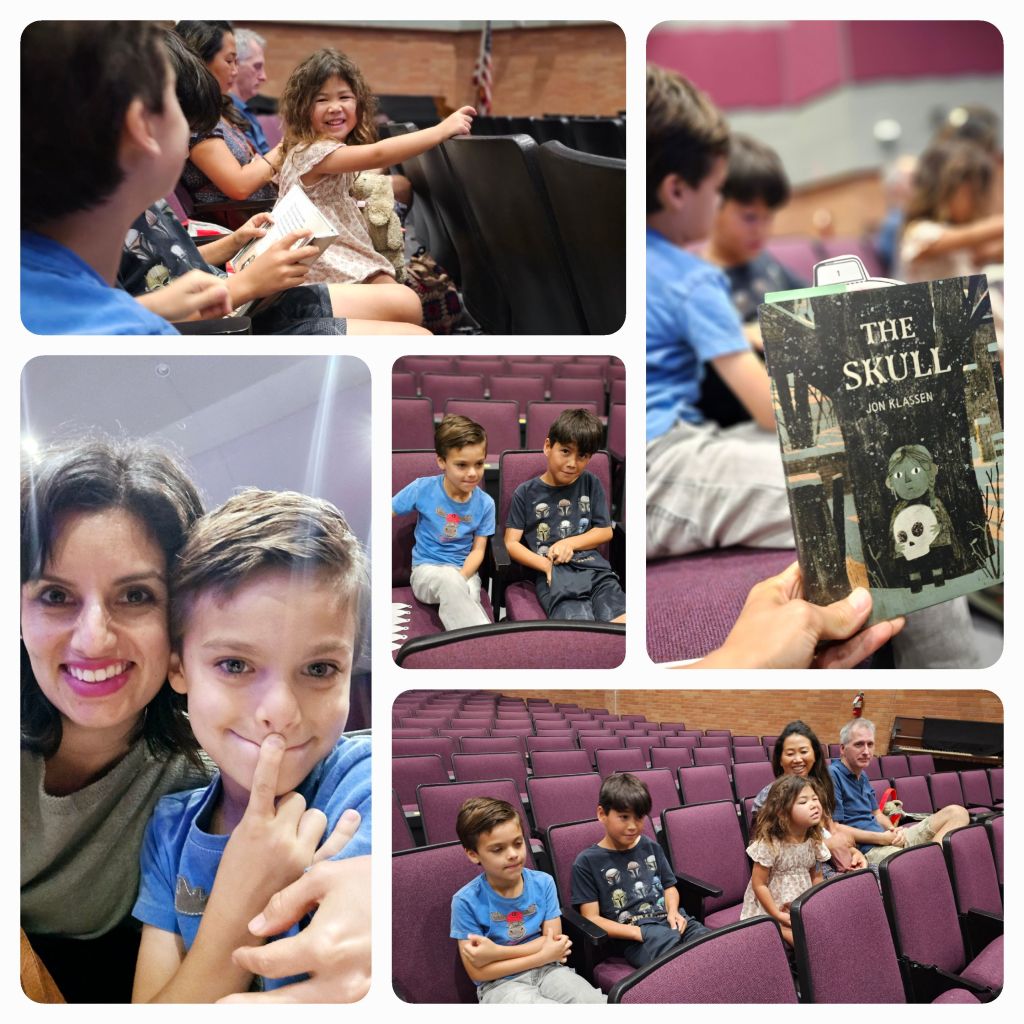
I have been wanting to participate in this series without and with my own children. I opted to leave Mila at home as she tends to get restless and you know I am attending for myself as well, haha. Yago loves Jon Klassen and so he was on his best behavior. We invited friends because K is all about skulls and dark things too haha. It was his and little S’s first author reading!
Author Presentation – The Narrative
After somewhat of a lukewarm introduction (we know he also writes & illustrates picture books, that is how he’s made his name with us!!) Jon joined the stage and read The Skull while it was projected on the screen. We listened to the 22 minute audiobook on the drive there as well, which was Santi’s first audiobook so I am glad it was a good production. Having Jon re-read it allowed the story to settle in our minds.
I also love to hear how author’s read their story. Jon of course maintained a neutral tone, very much keeping with the stoicism of the characters and narrative.
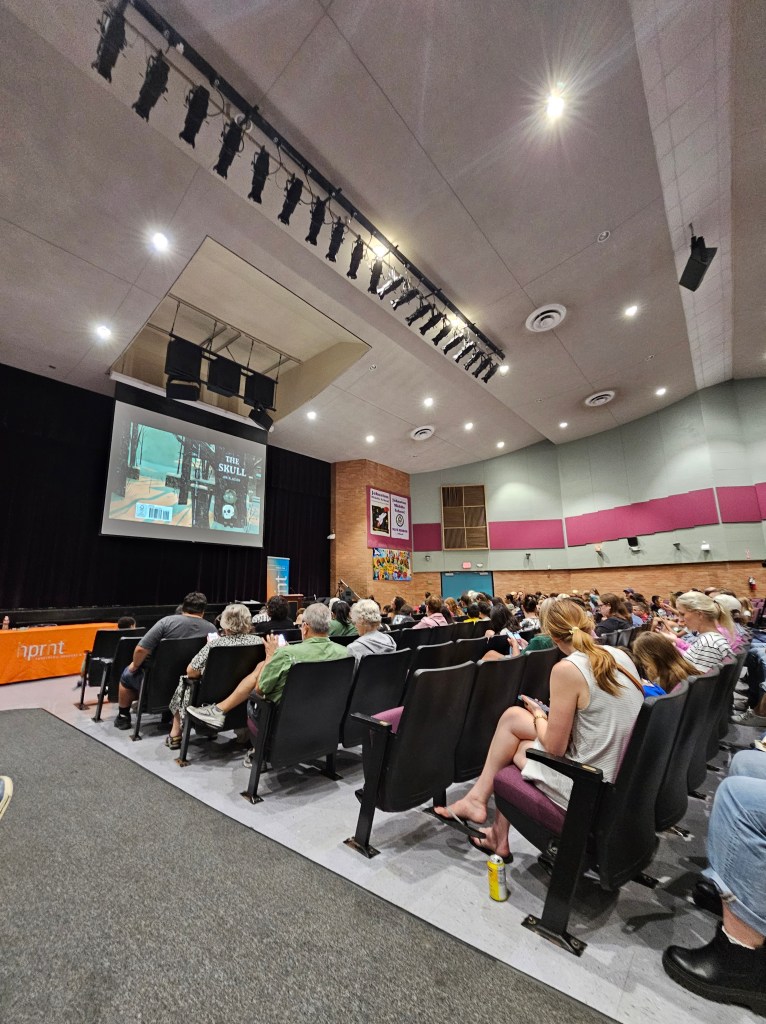
Jon made comments on his narrative and illustrations as he read. He admits writing does not come easy for him so he uses “said” throughout the dialogue. This is what makes Klassen’s books IDEAL for beginning readers. His language is straightforward and repetitive. Otilla, the girl protagonist repeats “all right” throughout the narrative. Through writing The Skull, Jon realized that “alright” is not actually one word and had to compromise for “all right,” although he fought long and hard for “alright.” I must admit, I thought it could be one word too! haha
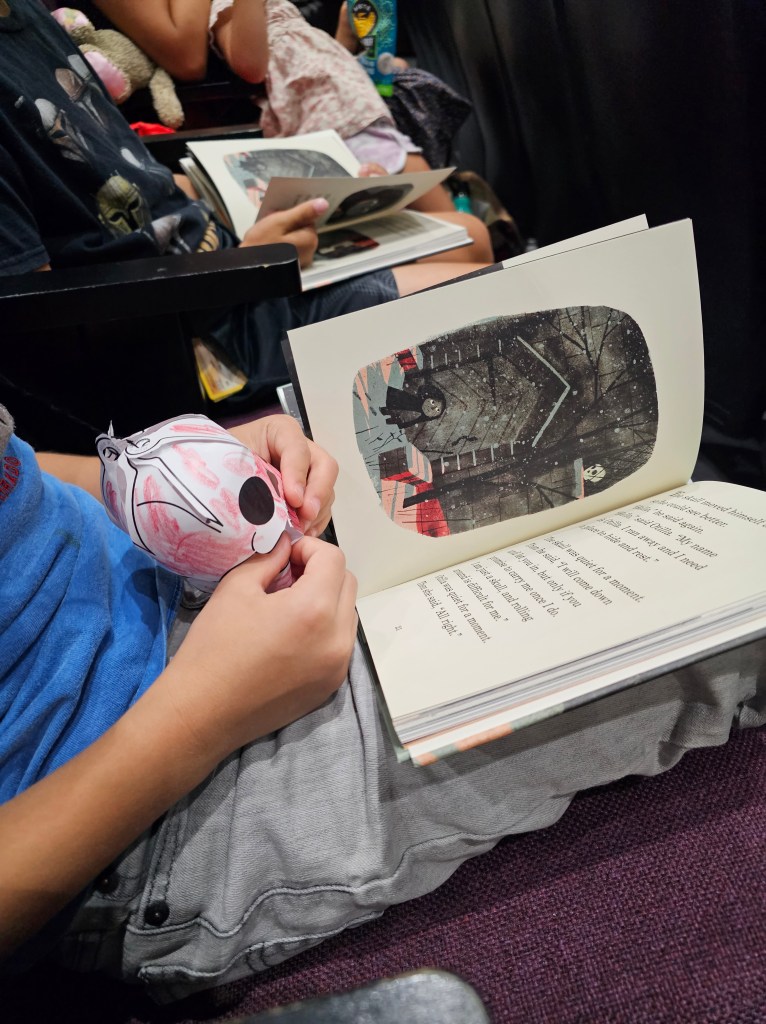
The Skull is actually a Tyrolean folktale, retold by Klassen and took about a four year process to get published. As mentioned in the author’s note, he first read the folktale in a library in Alaska, while doing a visit. The story stuck with him. He decided to contact the librarian and see if they could find the book. Upon re-reading, he realized he had changed the narrative completely. So he decided to write his version.
Jon talked about the Alaska-book-version and how Otilla simply held tight to the skull all night so the skeleton would not take him. He mentioned how scared the girl looks, compared to his heroic Otilla.
Klassen’s The Skull definitely carries the traditional gruesomeness of the original Brothers Grimm fairy tales. The steps Otilla takes to ensure the skeleton does not bother her friend the skull ever again can be disturbing, especially for a children’s audience. However, Jon made a point: If it is the right kid, they will be able to handle the ghastliness. He mentioned how his older son Isaac, whom the title is dedicated to as he was basically his art assistant, loves scary stories. His younger son, however, shrinks and avoids them.
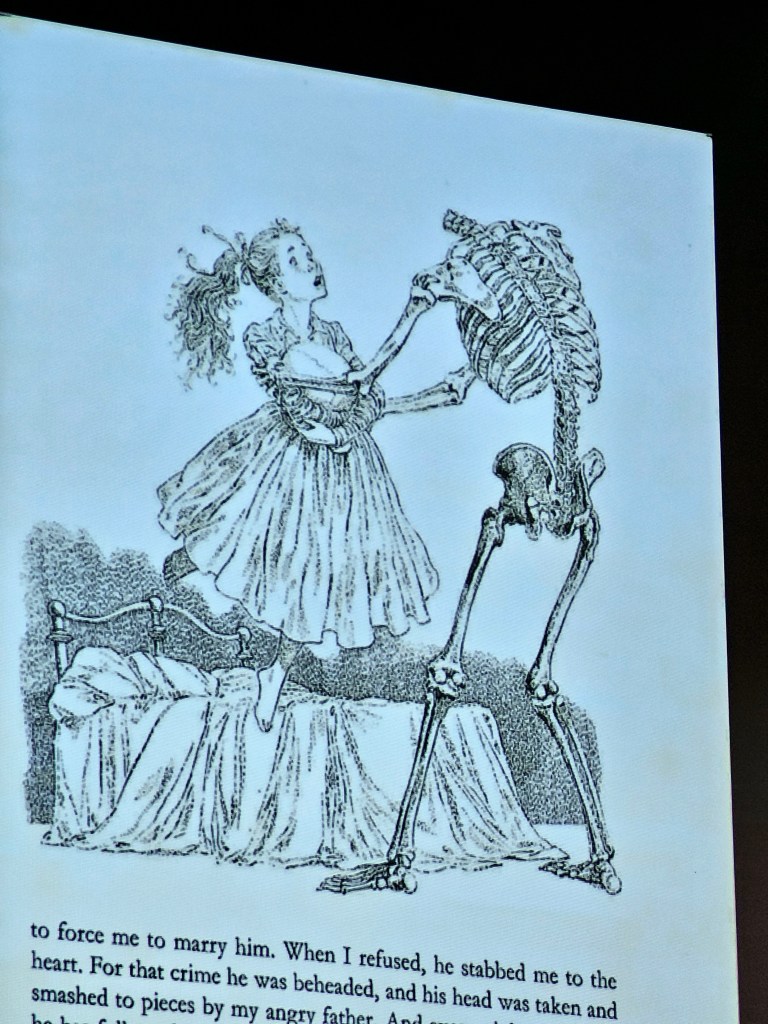
Yago —along many of his 1st grade and up contemporaries— actually loves very dark things for what I consider appropriate for his age: all the Trevor Henderson creatures such as Sirenhead, Cartoon Cat, etc. Lately, it has been Skibidi Toilet. This is internet horror that seeps into youth culture through online games such as Roblox and Minecraft and YouTube fan videos. I could absolutely filter what he watches on YouTube… but it does not keep him from still hearing about these things at school. Cultural osmosis starts early!
and The Void in Minecraft, a video game which apparently scares Jon.
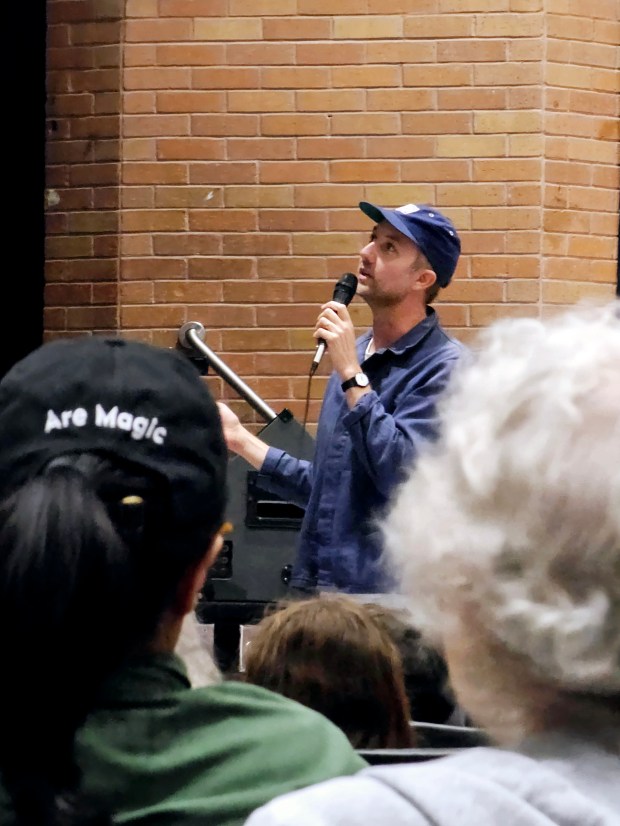
Klassen likes to give children credit for knowing things and “hanging out with what they know.” Klassen writes simply, illustrates what he does not want to write, and omits entirely what he wants his audience to fill in. Where or whom is Otilla running away from at the beginning of the story? That is for the reader to fill in with imagination.
Jon mentioned what many parents realize very early on: “how quickly [children] are people!” It take literal months for an infant to come into their personality & start voicing likes and dislikes. We do not have to get too heavily into morals to know if our children will like to read dark things. I must say, what I do love about LITERARY horror is that usually evil is defeated. Is it always in the most ethical way? Maybe not, but evil is not ethical either.
Klassen did say that to “defend [himself]” he considered Otilla’s actions towards the skeleton as a sort of finite cleansing: “The feeling of defeating your demons repeatedly,” to ensure they are truly dead.
Author Presentation – The Art Process
The skull is the first book in which Jon shows different perspectives! “Usually all my characters stand there starting at the audience” he said. It is true! If we think of his Hat and Shape trilogies: except for their shifty eyes, there is not much expression to their faces, and it is the same with Otilla, mostly. You can sense Klassen’s signature stoicism in the front cover of The Skull alone.
Klassen’s favorite illustration in The Skull is the only tight close up of Otilla, as she lays on the floor crying without shedding a tear. Again, Klassen expresses feelings, but his characters are still very much stoned-faced through it all. Otilla is definitely a brave heroine: We know she has seen hard things and can do hard things, and that is how her and the ancient skull connect.
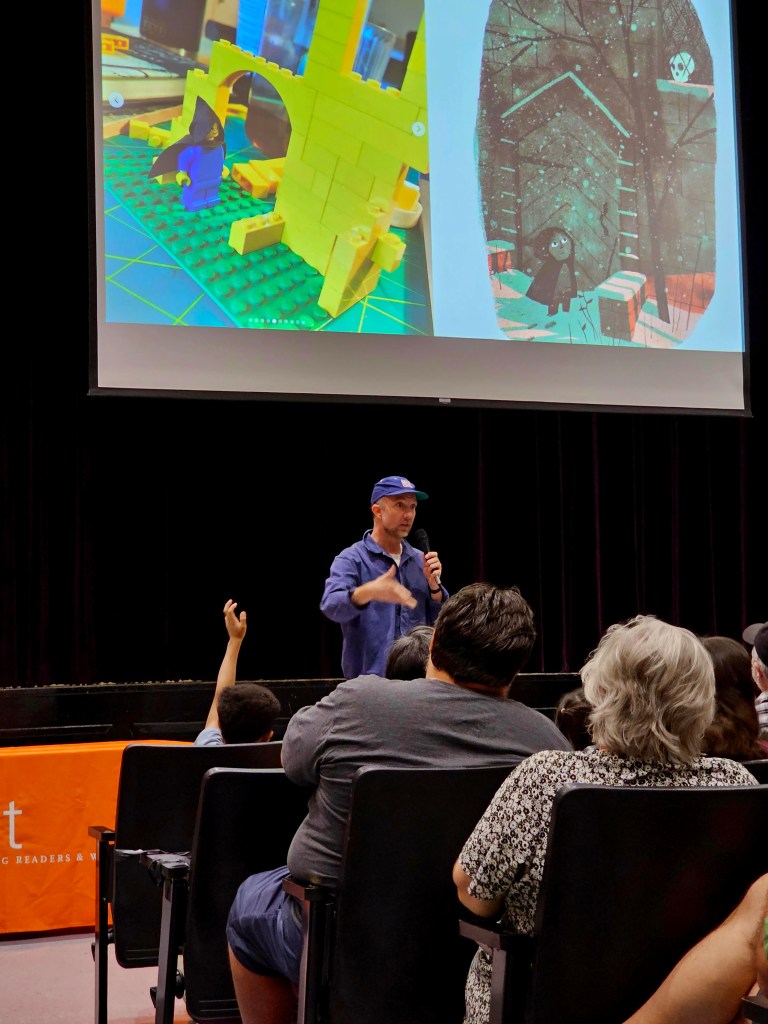
Klassen mentioned how his son Isaac, helped him with set design by collecting sticks for his scenes. He then would place them in fake snow to better be able to draw perspective. He used Lego structures as well, as show below. Yago got a kick out of that as he LOVES Legos! For falling snow, he actually used dirt, scanned and inverted in software to turn white!
Jon admitted that The Skull’s scenery is based on his hometown of Ontario, Canada. He definitely felt connection to the cold and gloom, living in such cold weather. Another important aspect of the forest for Klassen was the passage of time and space in that opening scene where Otilla is running away. He wanted to give the impression of almost going through a portal to reach the skull’s house. Away from her oppressors before, where she will never be found.
An interesting detail that came out of this reading was learning that Jon actually helped with the animation of Coraline! This was relevant as that is a dark movie/book as well. This came about as he talked about the lack of color in his art. He explained that animators usually only use pencils so color theory is intimidating to him. In The Skull he uses sun rays and warm tones to contrast the stark winter and portray optimism.
There will be no sequel to this story, Jon is sure. In the Alaska book version, a spell is broken at dawn, the skeleton vanishes into thin air and the skull turns into a lady in white who offers Otilla a lavish life with a group of children to play with. Klassen didn’t want “some weird kids” showing up and breaking the bond between Otilla and the skull so she leaves them as they are. But they can’t live off pears forever! A tween audience member exclaimed! haha. Jon assured her there are likely squirrels and rabbits in the woods Otilla can hunt down for protein.
I think nowadays kids want and are used to having all the answers spelled out for them. But Klassen says: you come up with how Otilla and the skull pass their days. In my mind, she grows older (she is only about seven after all). She heals from her past trauma and decides to meet the world outside of the Skull’s castle. When she is ready. The skull will likely not come. But she will visit with her kin. They will have pears and tea and dance in the hall at every visit.
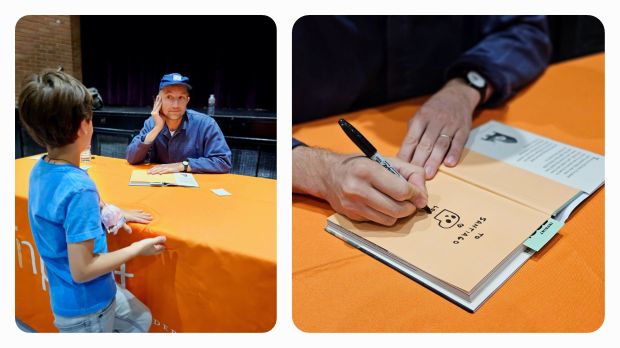
Until Next Time, Jon!
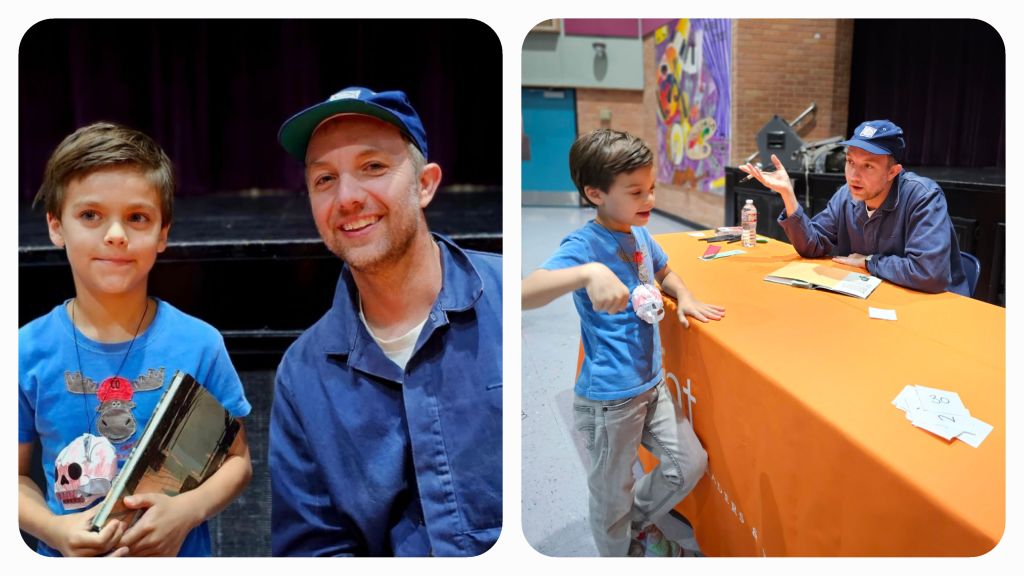
Although the line to the book signing was slow, I wholly enjoyed the reading & hearing about Klassen’s art process. I hope it inspires Santi’s illusions of being an illustrator/animator in the future. But, attending author readings is good for children in the present alone! It is a privilege to hear from authors first hand. In the audience there was probably less than five Hispanic/Latino families. Rest assured that you are welcomed to come to these events. Make time to come, it is the only reason they will keep hosting them!
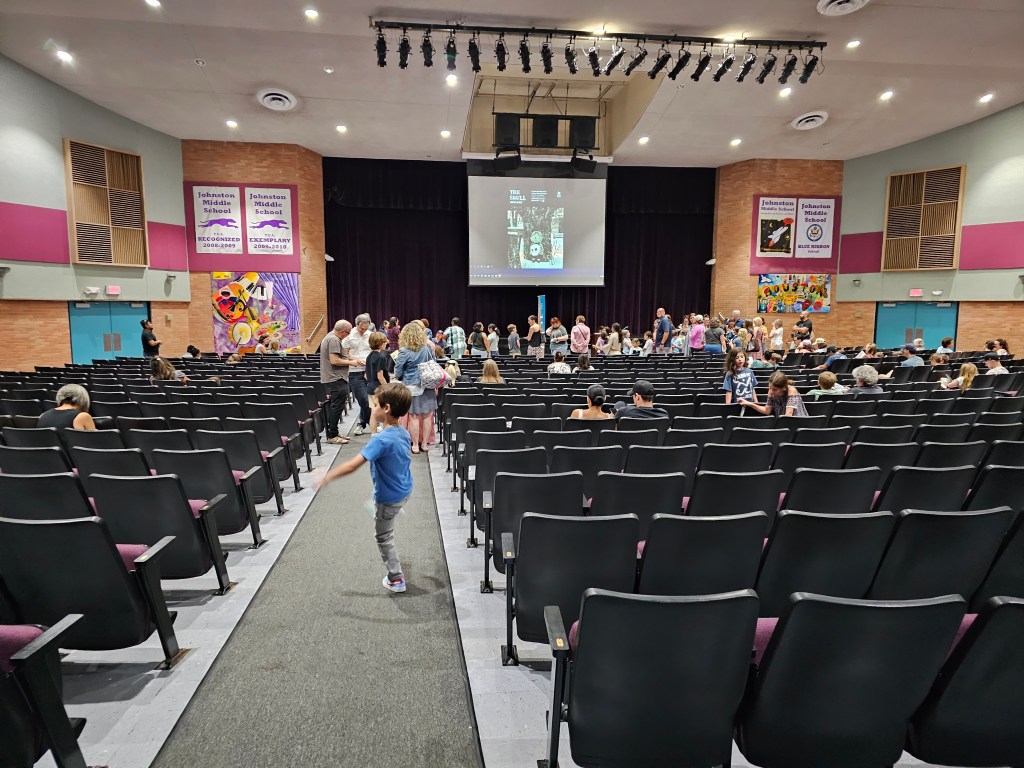
As for us, we cannot commit to all the Cool Brains! readings but would like to attend more every season, with Mila & Daddy in tow. I hope you enjoyed the details of the presentation, gained some insight into the book, and learned something new about Jon Klassen in the process.
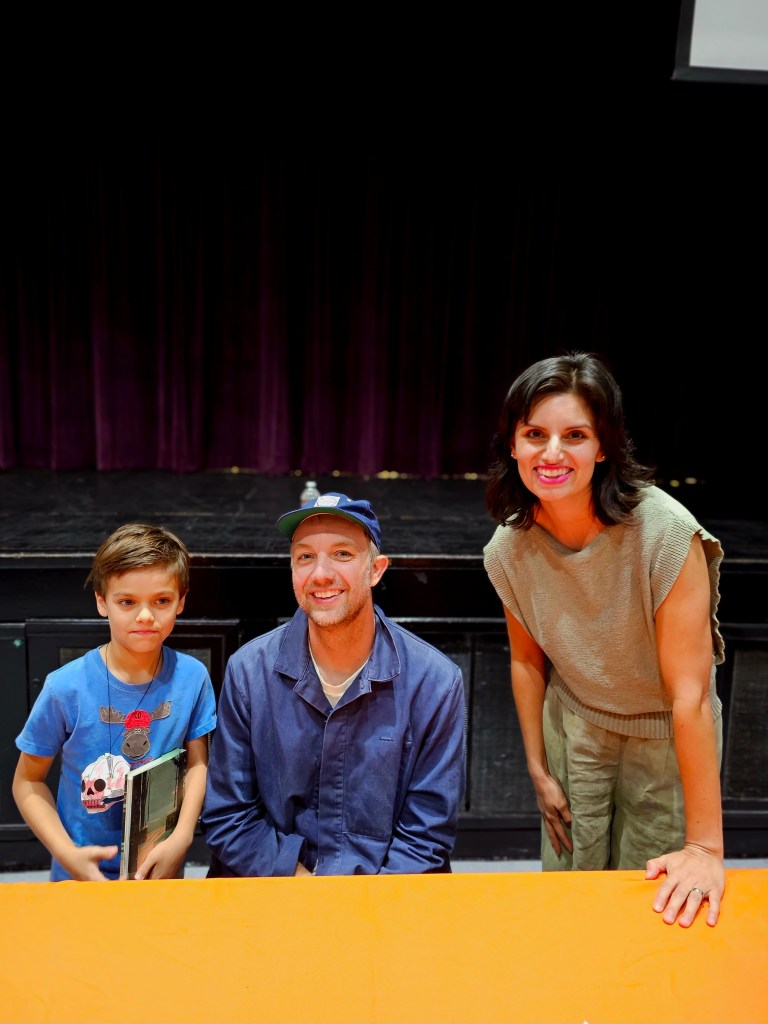
Fin

 Biblioterika