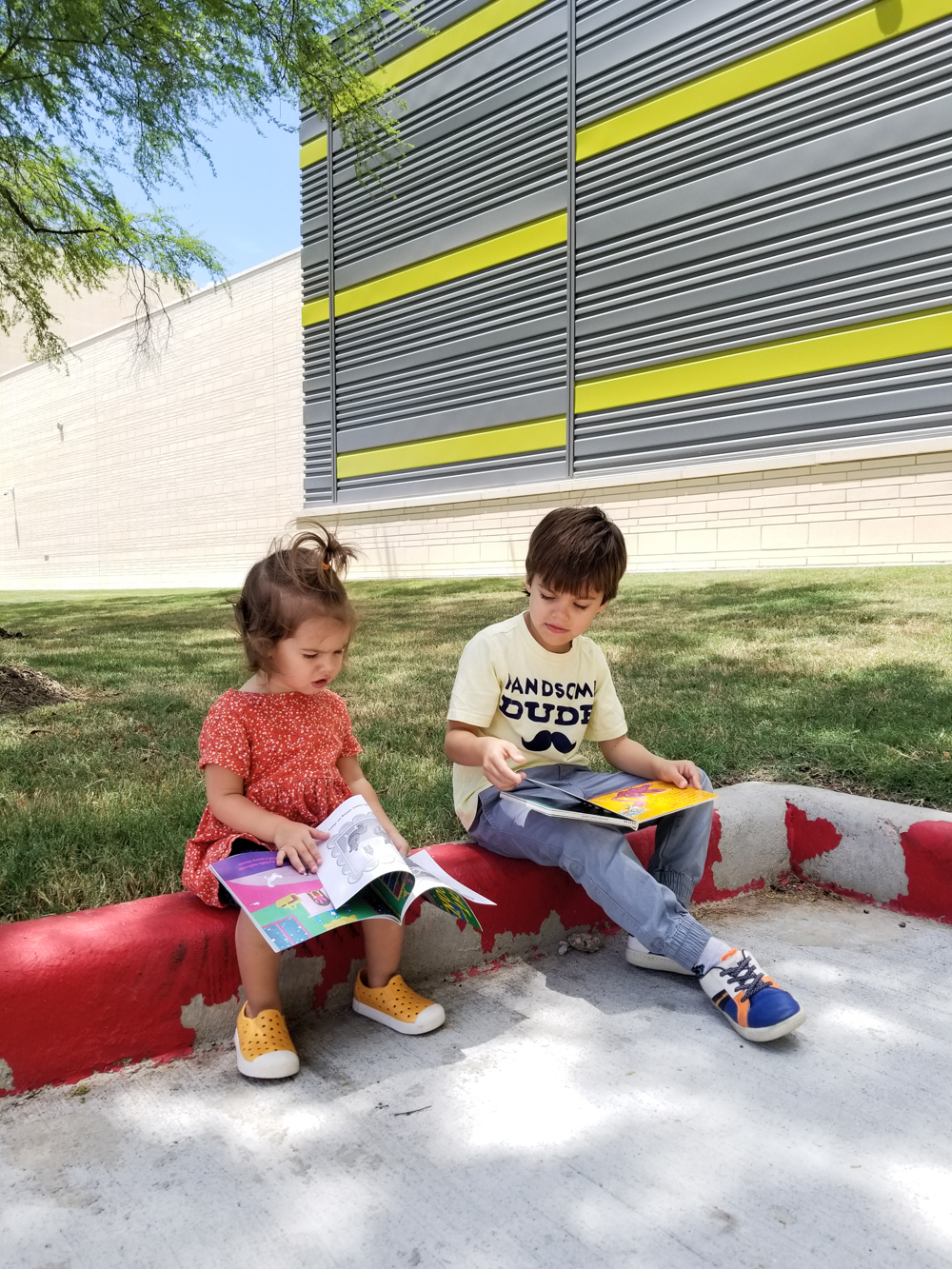
A few weeks ago, I saw an Instagram reel about a mom with 3 children under 3 years old who STOPPED visiting her public library because the process was too overwhelming for her. Given that this was back in 2016, curbside services were not prevalent or non-existent altogether. As a children’s librarian, it bothered me that she felt that for YEARS she could not visit the public library, so I decided to write a post for mothers & caregivers who are experiencing the same overwhelm.
As her post suggests, there are different seasons for parenting. Obviously most parents with children under 10 are likely not going to a Six Flags theme park given the limited rides they will be allowed to ride. But, it struck me that maybe this mom did not know her OPTIONS when it came to using her local public library, a space that FLAUNTS a welcoming atmosphere for babies, toddlers and preschoolers & bases a major portion of their programming to serve this population!
No Longer the Quiet Place it Used to Be
Some may lament the fact, but for the modern parent, this means a welcoming atmosphere where they will not feel judged for their baby spontaneously screeching in delight while flipping through a board book. Most libraries also offer a children’s “play area” or “lounge area” where they can hang out and make acceptable amounts of indoor noise: definitely decibels beneath Urban Air, but more along the lines of bookstore or coffee house conversation.
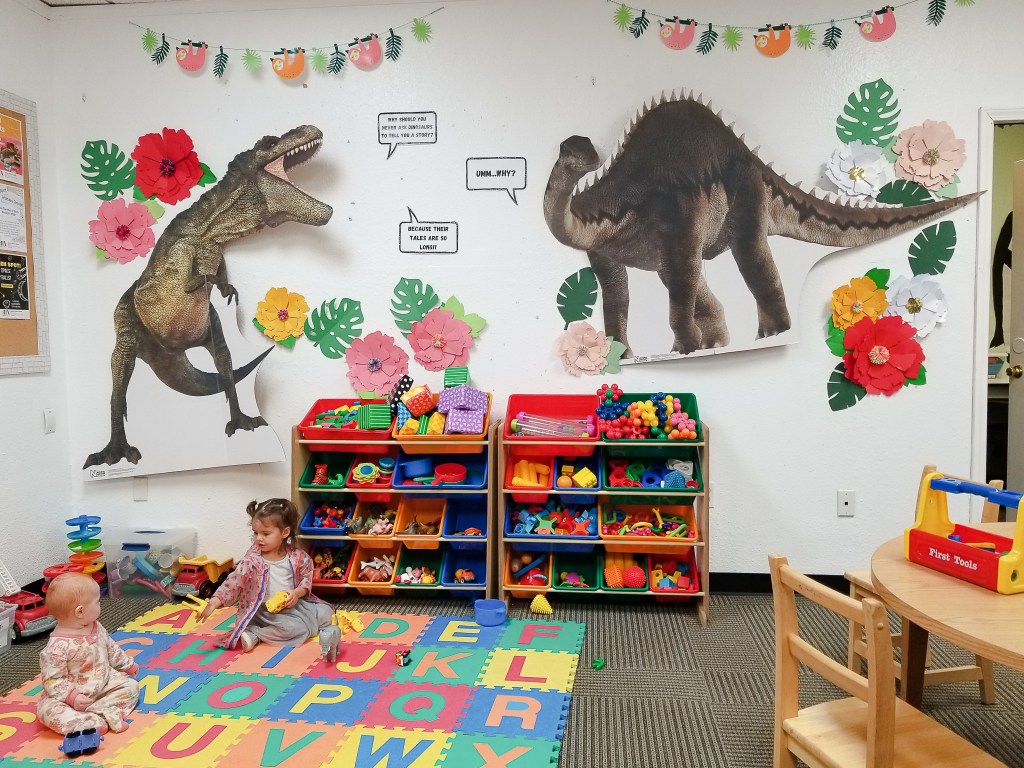
The children’s area varies by location. Some are in completely different floors than the adult collection, while some may be in a tiny corner of a smaller library. In either case, discretion is still advised to parents concerning noise. Usually staff will alert you if children are being too loud. Know that staff are not doing this to make you feel unwelcomed, but because they have to be considerate of other patrons trying to use library space for reading, studying, or conducting meetings.
If your local library has a play area: BEGIN HERE! This is an area that patrons will avoid if they seek quiet & from where staff usually tolerate a few rogue screams. The play area is still a perfect place to practice two useful social interactions: sharing with kids other than siblings & cleaning up a common area.
A Variety of Children’s Programming
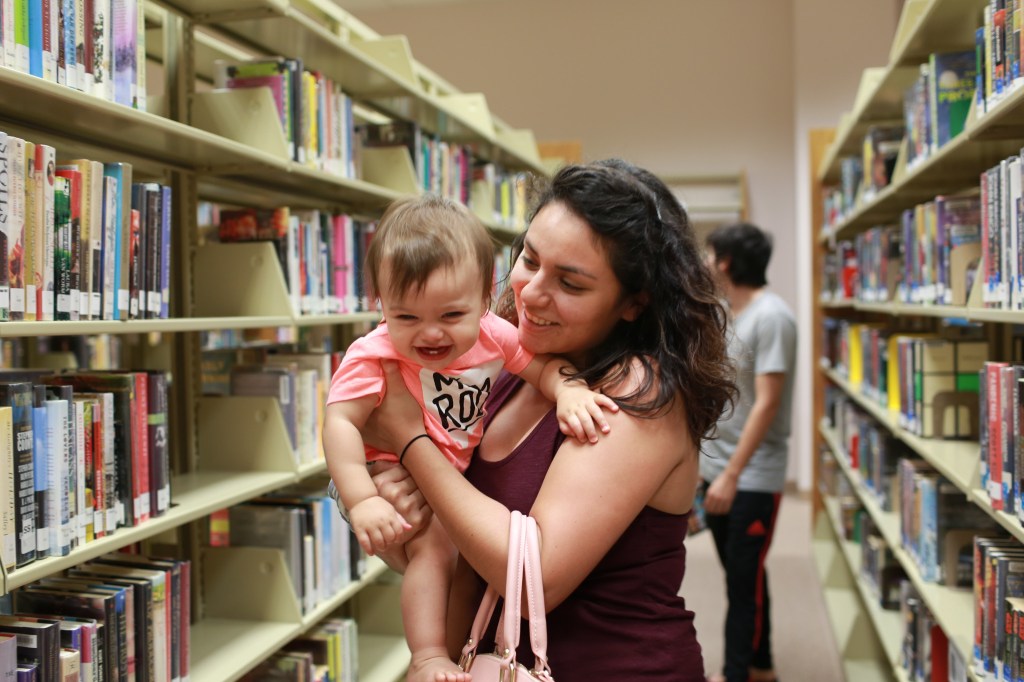
Because youth departments spend so much in staff and resources creating & presenting programs for babies through preschool children, I’d hate for these efforts to go unused by caregivers!
Almost all public libraries will have story times exclusively for babies, some are called Mother Goose Time, Baby Bounce , or Baby Story Time. These are best enjoyed by babies 3 months+ and their caregiver, but open from 0-18months. As a first-time mami, I started attending when Yago was about 4 months. Usually these story times consist of singing, bouncing, and lifting your baby to rhymes and songs. Scarves, shakers, and rattles are some of the prop used. Usually baby toys are brought out at the end of the program.
This was one of my favorite story times because it helped me create a bond with Yago as a new mom! I was happy to connect with other first time moms as well and run by any questions or doubts we had about milestones. Word of advice, this story time is best enjoyed with babies or non-walking toddlers ONLY. For safety reasons, it becomes too much when toddlers are running around, risking little crawling fingers to get stepped on. If you have toddlers and babies, there’s less overwhelming options:
Toddler Story Time, ages 18months – 3 years
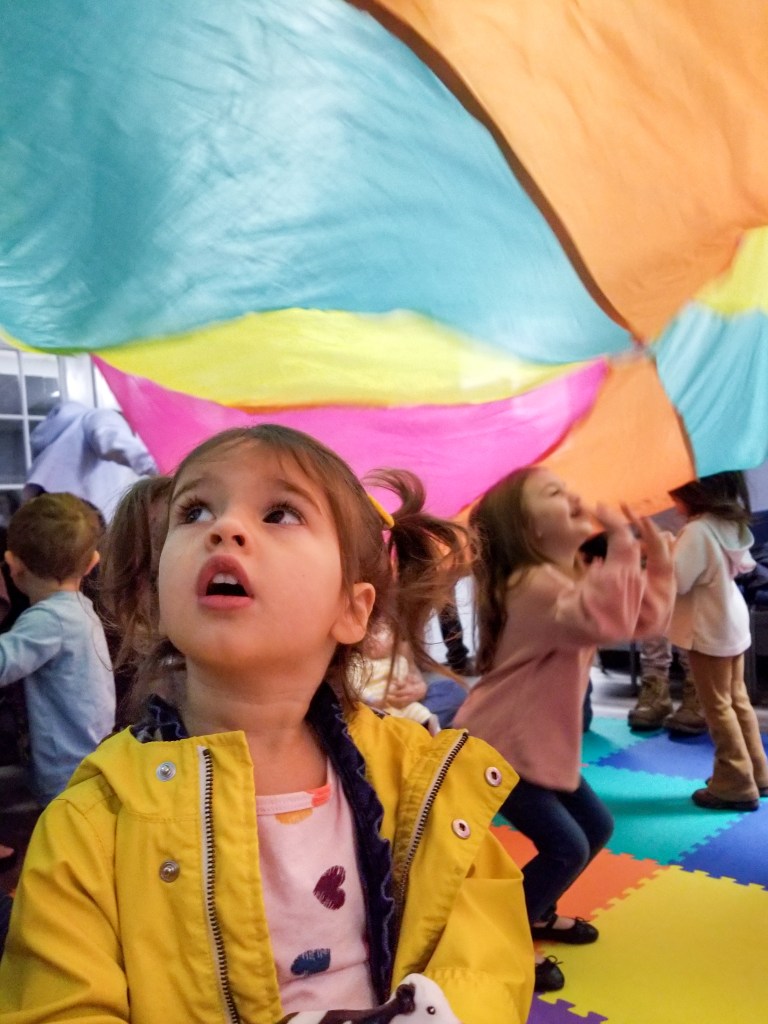
Full chaos does not identify this story time, but it can come close, haha. There is definitely shorter books read, more repetition, & plenty of movement for this age group! If you have a wild child toddler he will feel more welcomed in this story time. You can keep your baby in a stroller or try to follow along with him in your lap for a Baby Bounce experience during Toddler Time. Toddler times are shorter in duration than preschool story times, with plenty of playtime at the end. Some libraries may incorporate a craft into this story time or have a special “toddler zone” area for hangout after the official story hour.
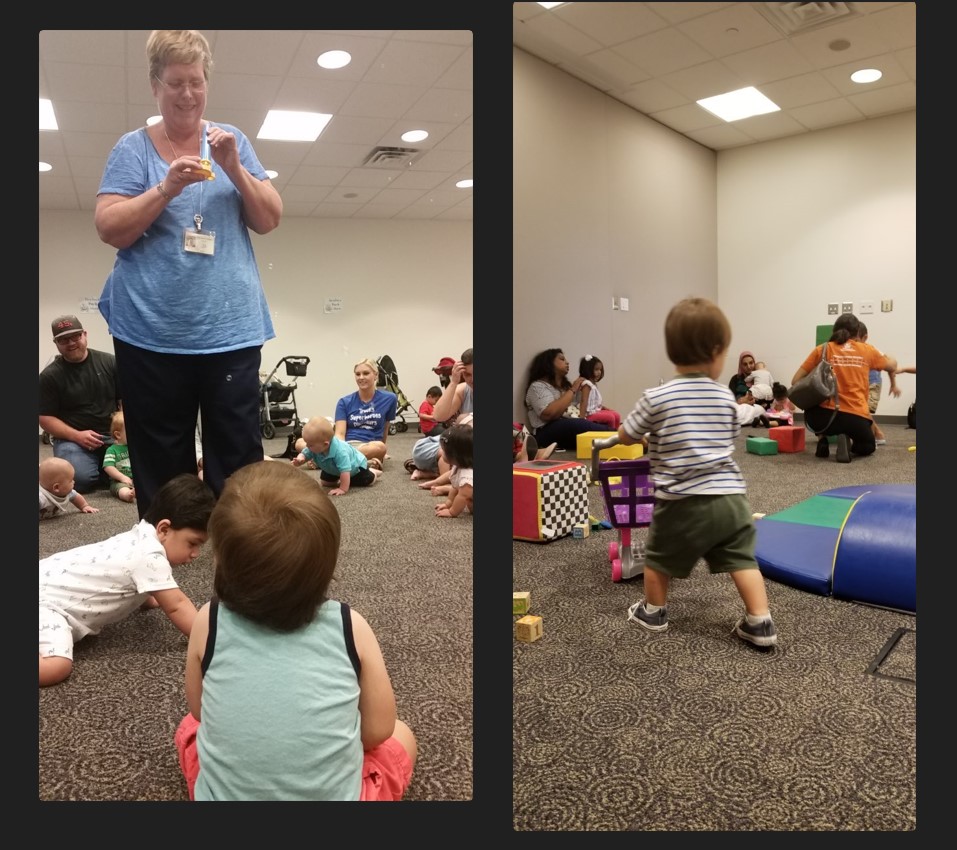
Consider that you can simply show up for the “fun/open play” portion of toddler time as well. Again, this will allow your children to practice social skills such as respecting personal space, sharing, and cleaning up afterwards.
Preschool Story Time, ages 3-6 years
Things start getting a little more serious for this age group. Preschool story time is a perfect way for preschool children to get ready for school by sitting still, listening & following instructions. There is still plenty of fun! Usually the books read are longer, there may be a movie version of a book shown, and a puppet show! Although some libraries opt to do puppets shows for toddlers as well. The craft component at the end allows for scribbles which prepare children to write!
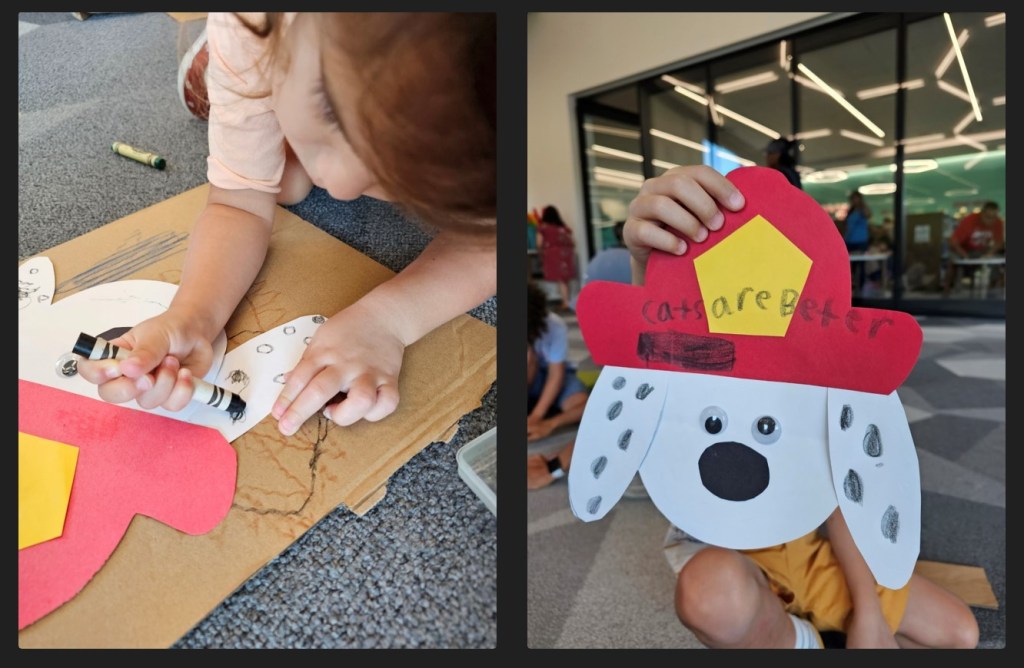
If this is the story time you are used to as a parent, do not hesitate to hold your preschool age child back in toddler time until he shows the maturity for this one! Another option is to not attend the WHOLE program. This is an option for ALL library story times and family programs.
If your children have NEVER attended library programs you may start with 10-15 minutes and see how it goes. You may say that it is not worth driving to the building if you are only going to stay for 15 minutes, but I will offer another option below that will make the trip worth it. I would often encourage patrons of active children to keep coming back!
Consistency is key to getting the behavior you want out of your children. If they do not have opportunities to attend story times they will have a harder time modeling proper story time behavior. Finally, If your preschooler is not enrolled in a private preschool, mother’s day out, or daycare, story time is a perfect opportunity to practice settling down for the classroom once they start prek or kindergarten in public school. Story times, beginning with Toddler Time, allows children to participate with flannel boards or return props to the front of the room, skills that help develop independence and confidence for grade school.
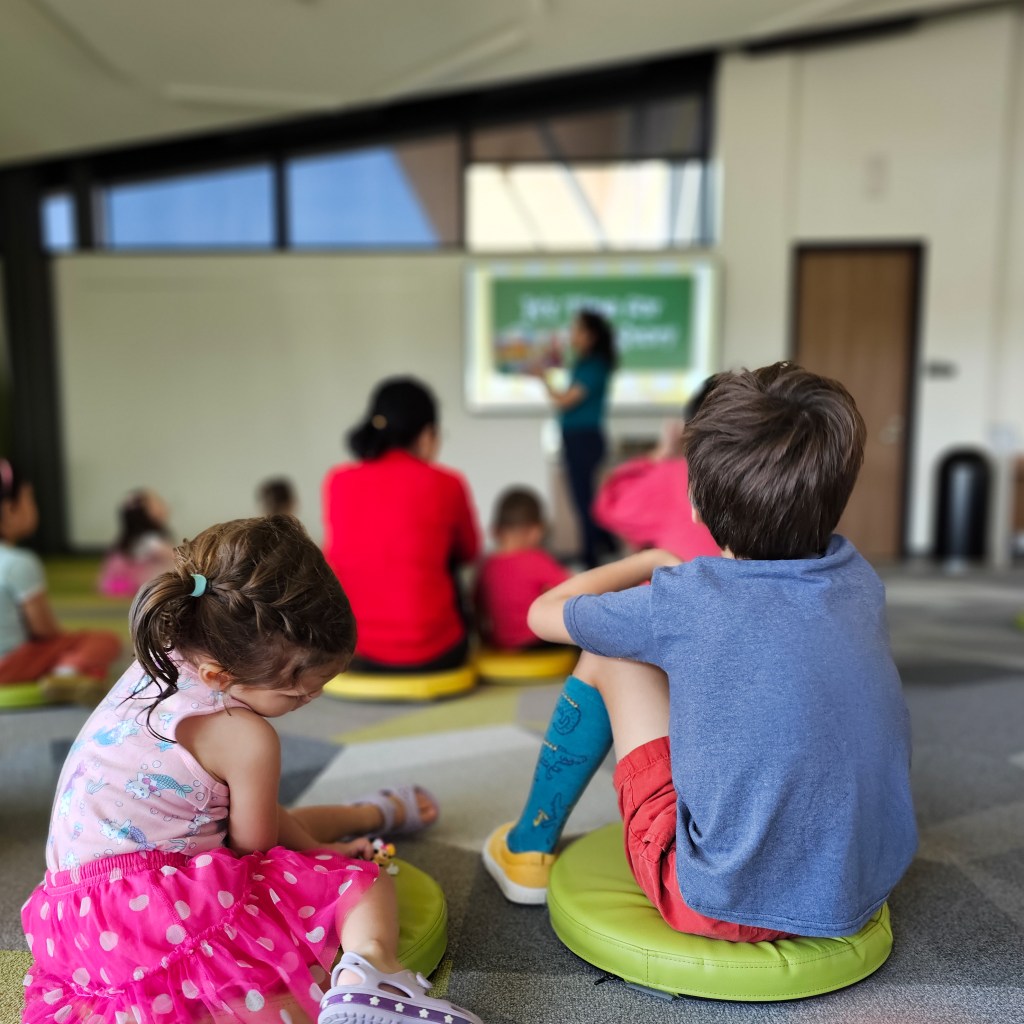
A note on special needs children: The library does not have the trained staff to care for special needs children without a caregiver present, but they will try to accommodate as best as they can. If your special needs tween or teen would do better in a story time, they are welcomed to come in! They may also be able to attend special family programs with a mixed age group so they do not feel self-conscious but still participate in library programming.
Special Family Programs
If you’re not ready to commit to a weekly program, you can start off by bringing your children to a family program you know they would enjoy. Most public libraries will offer at least one family program per month. We have attended big foam Dino bones, slime making, robot code writing, Lego building, and an end of summer celebration outdoors, to name a few.
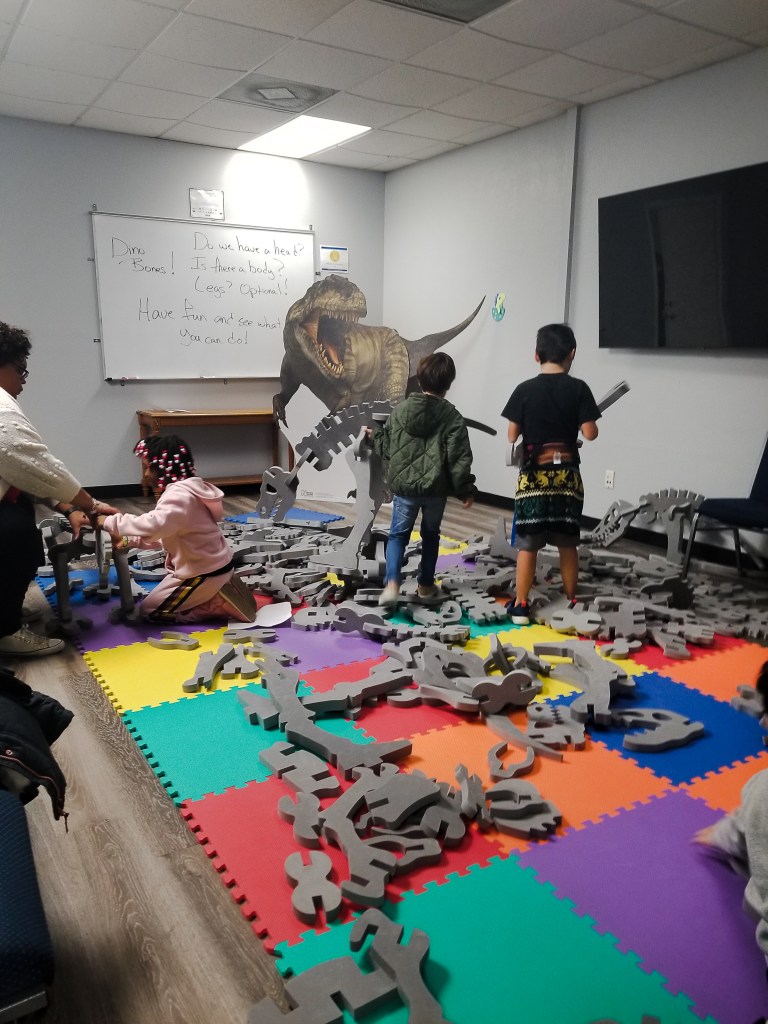
It is amazing how libraries are using their spaces creatively to serve families! Given good weather, you may check if they offer outdoor story time, which would feel less overwhelming if the baby starts crying in the middle of a book. Most librarians and children’s specialist are phenomenal at presenting their story times but I did encounter a few flops as a parent. If you think your toddler/story time presenter is expecting a little too much from toddlers, for example, talk to staff or drop a comment in the suggestion box or online.
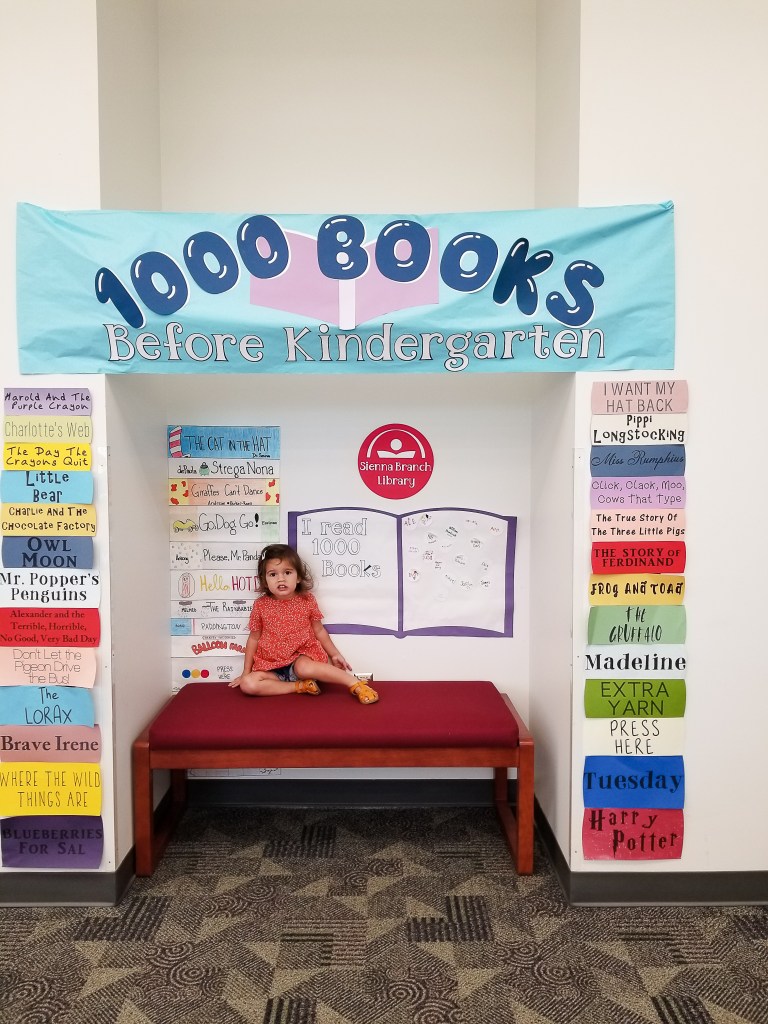
There’s passive family programs such as the Summer, Fall, Winter, or Spring Reading Challenges that you can opt in from home without visiting the library, except to receive your prizes! This option is open to babies 0 years old to teens 14 years of age. Another great option is joining the 1,000 books before kindergarten challenge, which encourages reading to preschool children from birth to 5 years. Although passive programs are not ideal in my book, it’s a start, & still shows support for you local library & allows funding to continue to funnel into the institution. Ebooks and eMedia are also available through library websites, all you need is a library card!
Curbside Pickup: Not Just for Groceries!
Did you know you have the option of placing a whole stack of books on hold and then picking them up either curbside or “carry out”? You heard correct! Instead of browsing books in person— although that does allow for more serendipitous discoveries— you can log into your library account and place up to 10 books on hold, some libraries may allow more.
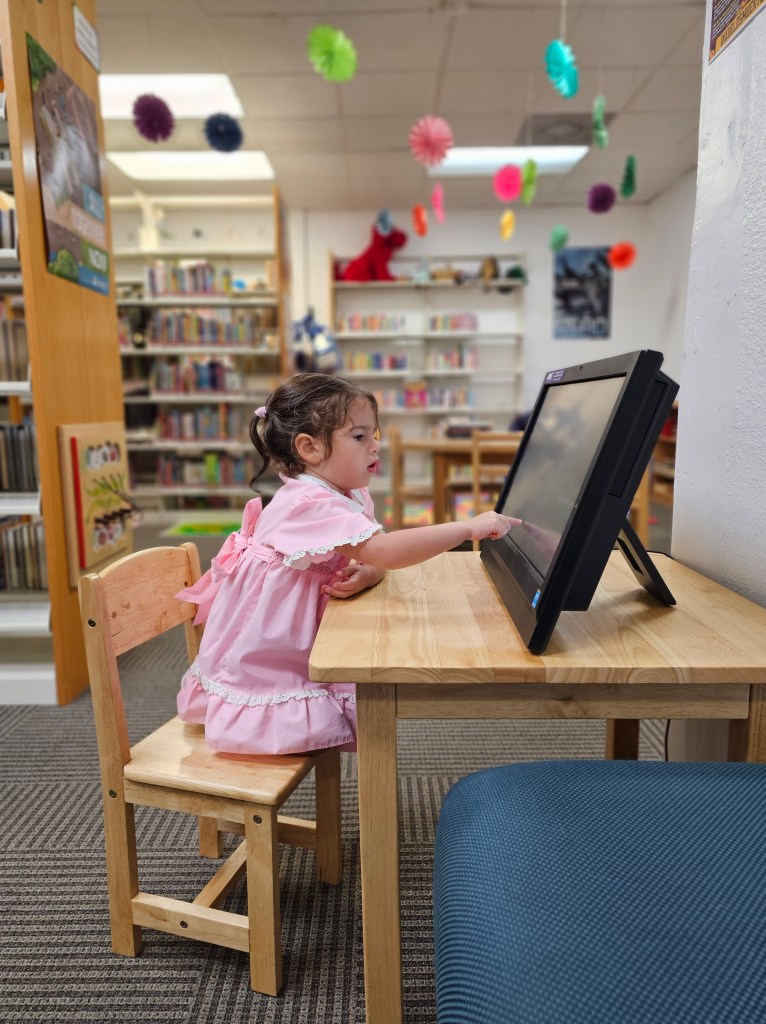
It helps if you know what you want to read, but some libraries have started linking their “new books” online as well. If your local library offers that option you could place new titles on hold from home. If you do not know your log in information you can easily call the library for assistance.
If you attend 15 minutes of story time, pick up your holds, & spend another 10 in the play area, that’s a half hour well spent at the library. You have allowed your children to practice library etiquette, you all had opportunity to socialize, & take books home in one short visit!
You Are Doing Enough!
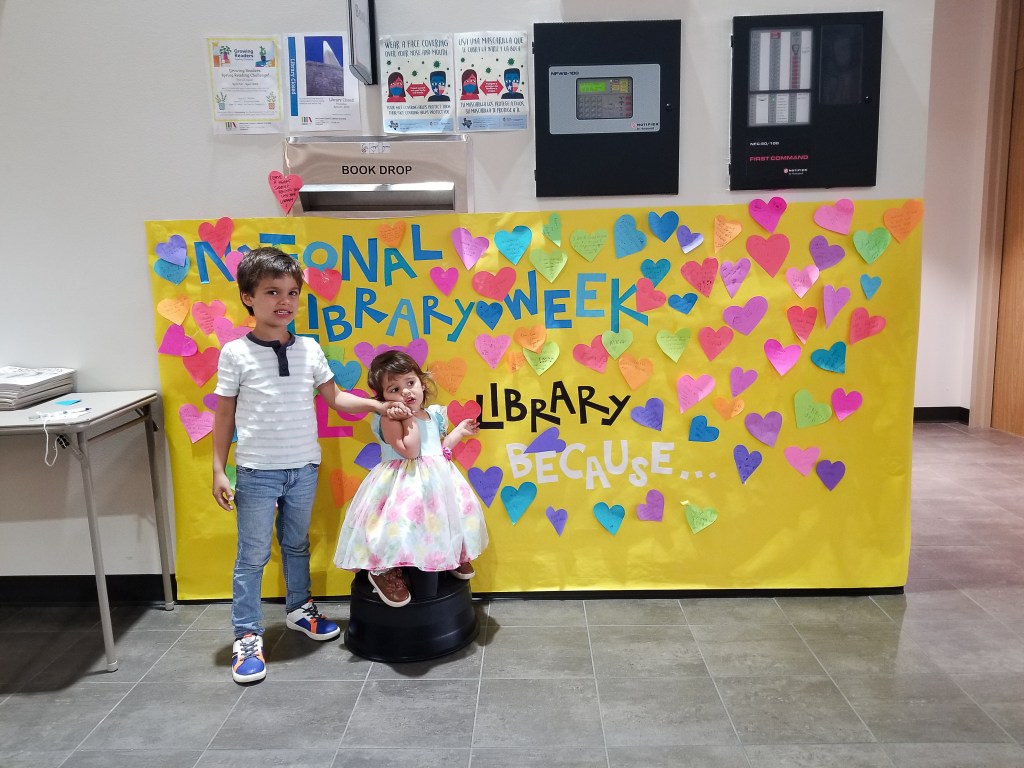
The library is a default & “free” option for me to bond with my children. I saw the benefits attending regularly would bring working in the field before having children, so it never occurred to me not to attend. I realize reading and library programs may not be a top priority item, especially with your hands full with babies under 3 or 5! But I imagine going to many places with small kiddos is difficult overall, so I hope this guide helped make the library less overwhelming for you.
Your local libraries are here to support you as a mother, father, or caregiver, believe it or not! They provide the space for new parents to bounce off doubts and ideas, ask how others are dealing with toddler tantrums, offer plenty of reading material on parenting or special needs children. It is truly a haven that is being wasted if you do not step inside!
What other things overwhelm you about attending the library with children, or alone for that matter? Leave me a comment below!

 Biblioterika