These books set out to answer what home is. Home is families living within four walls, or the camper, or the truck. The mundane routines you take for granted. Home can be heartwrenchingly lost at the hands of tyrants.
I loved these books because they focus on the strong attachment we have to family members. How our lineage matters, & we should take pride or at least show a litle reverence to our ancestors as we descend from them.
Home / Hogar
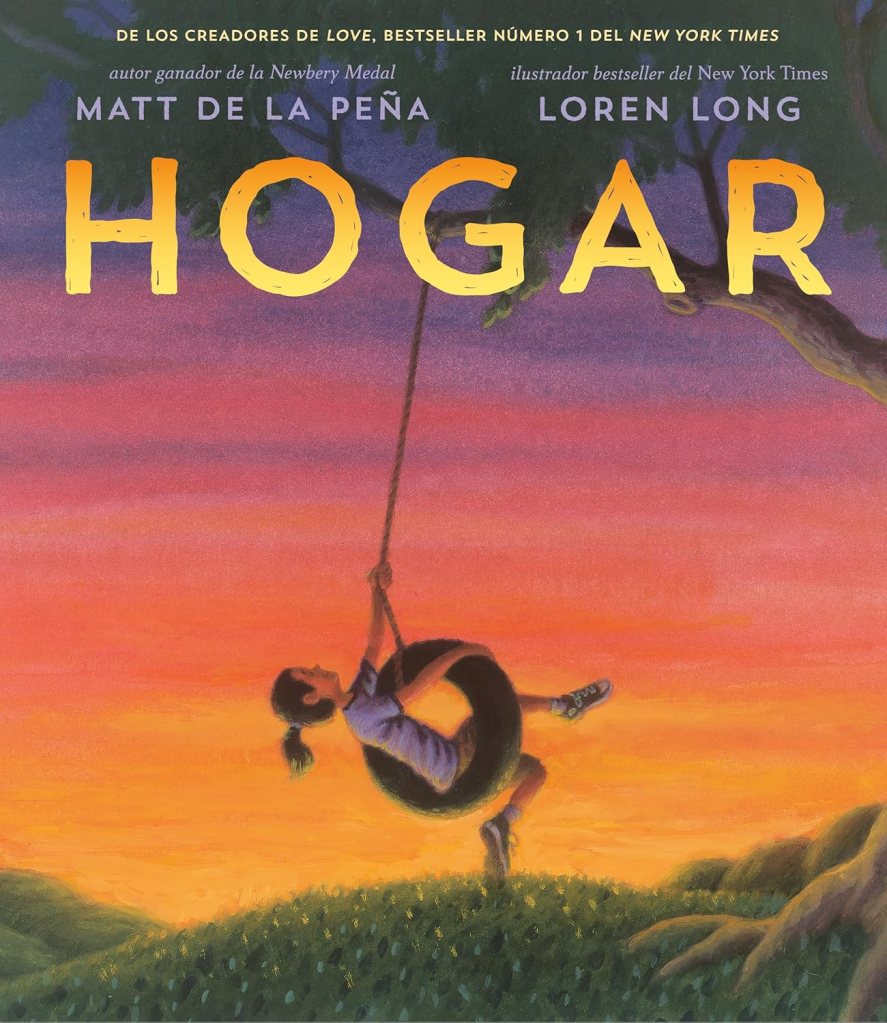
Written by Matt de la Peña, illustrated by Loren Long. This is a second in what I assume will be a trilogy. LOVE is the other title by this duo. Matt de la Peña, as I’ve mentioned before, is a poet at heart so maybe not the best choice for your toddlers lol Like in LOVE, the duo includes the hardships of losing a home to natural disasters or economic downturns: “home is not a house you leave behind but the people who walk beside you.” And is that not the truth of all the books I will discuss after this one? I love that de la Peña added the moments spent with friends out in NATURE & eventually he confirms that nature is our HOME. The diversity of cultures featured in Long’s illustrations makes this a universal, almost prophetic style book, inclusive of all man-kind. Everyone deserves a home.
Estoy contenta que ya hay una traducción completa de este libro, así que mantendrá su esencia poética.
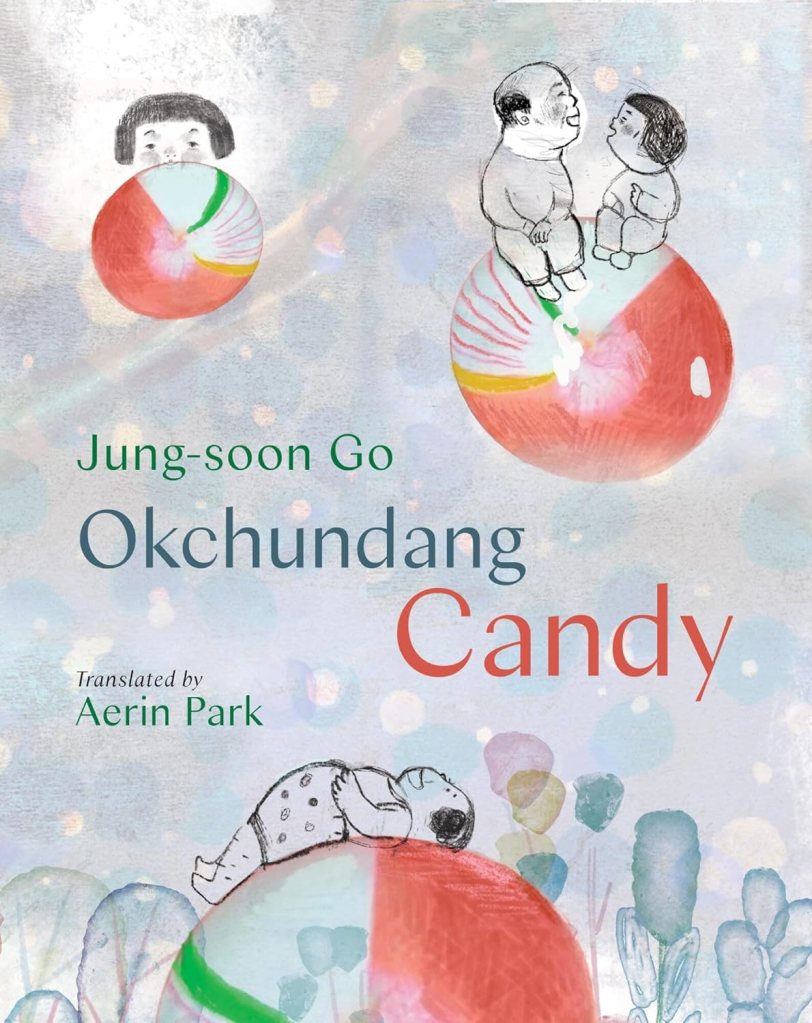
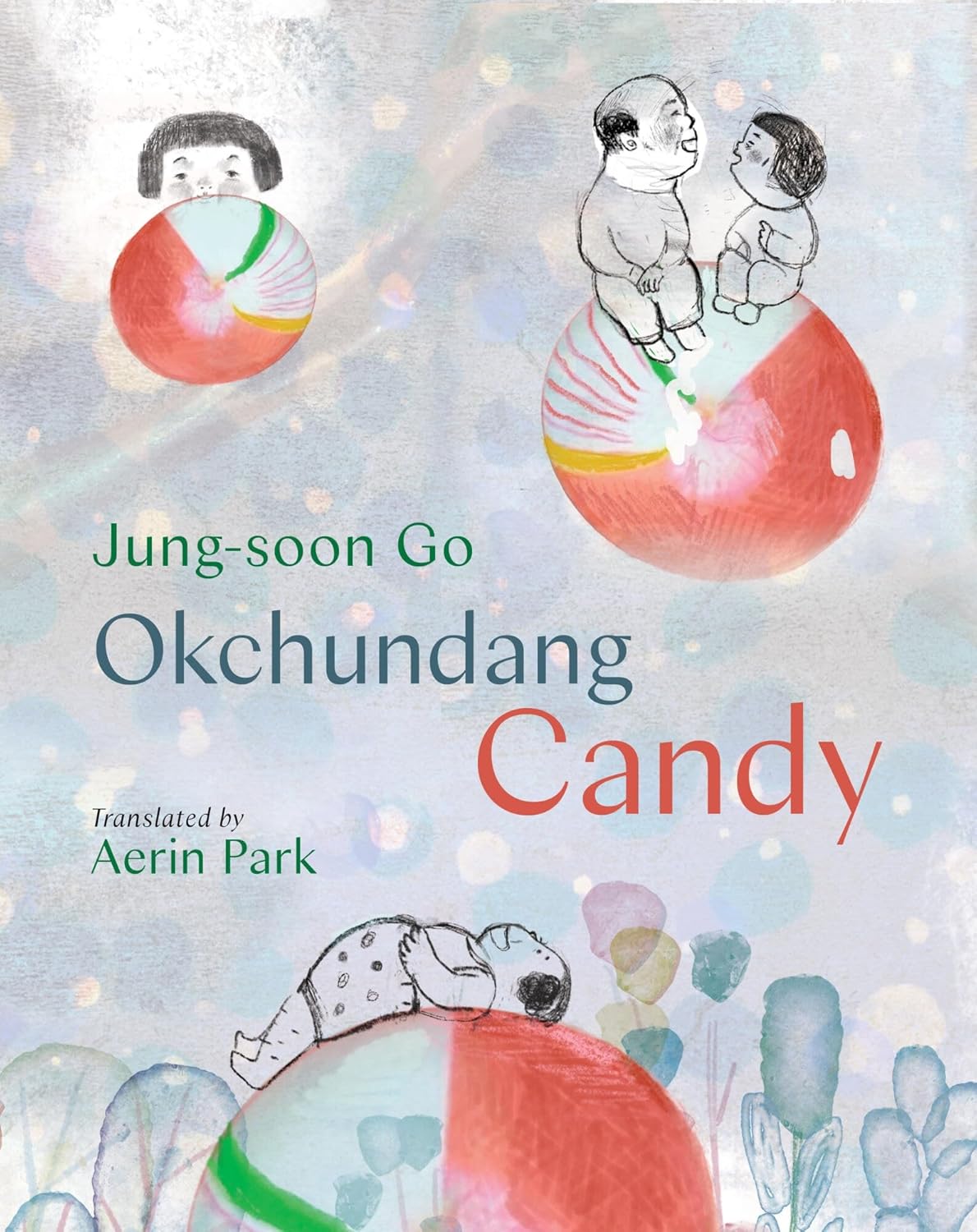
Written and illustrated by Jung-soon Go. Translated by Aerin Park. A graphic novel memoir, originally published in Korea in 2023. Go loved spending her childhood with her loving grandparents over her own fighting parents. But this is not a story about her. Rather, she focuses on her grandfather getting lung cancer & the descent of her quiet grandmother into Alzheimer’s. The story is not a light bedtime read & is probably best for children ages 8 and up but I loved the gentle way in which Go presents the subkect matter. The watercolors are soft with splashes of color but most endearing is the way Mr Go Jadong treats Ms Kim Soonim.
Her grandmother is happy to have her husband as her only friend, which is probably why she abandons herself to Alzheimer’s once he passes. Twelve years she lives without him until they meet again. The book also shows the extended family’s involvement in Kim Soonim’s care without resentfulness. Aging parents and grandparents is never easy to deal with. I know this was theraupeutic for Go to write, she also wanted to immortalize her grandparents’ memory in a book, but it also helps younger generations privy into what comes with aging & death. She presents the matter in a realistic, yet hopeful way. Home is in our memories.
Una narrativa bellamente ilustrada que nos incita a apreciar y cuidar de nuestros ancianos a una capacidad saludable. La familia de la autora no se dedica exclusivamente a cuidarlos desde su casa, pero se nota la reverencia de una nieta hacia sus abuelos y un poco de culpa por no estar tan presente antes de perder a su abuela a Alzheimer’s.
One Day: A True Story of Survival in the Holocaust

Written by Michael Rosen, illustrated by Benjamin Phillips. Since we are already on a heavy topic, this picture book biography tells the story of Eugene Handschuh, a Hungarian jew and communist resitance fighter. Handschuh’s story takes place in Paris over the years 1942-1943. From trying to dig a tunnel out of the Drancy Internment Camp to jumping out of a moving train on his way to Auschwitz, Handschuch’s motto is to “get through one day and then the next.” The austerity of the narrative is reflected in the industrial, dready-brown and military-green tones.
On the theme of family, this biography speaks to the strenght of familial relationships when it comes to forging safety and courage. There is no doubt that the bond between Eugene and his father Oscar (along with his brother, not mentioned in the book for clarity purposes, it is geared at children after all) is what encouraged them to gather other men for survival. The author was commissioned to write this book and he probably agreed because his great uncle and aunt were on the same train from which the Handschuch’s escaped. The Rosen’s however, did not survive.
How small this world is, how we are all linked in one form or another and we forget to treat each other like the brothers and sisters that we are! One Day is a heavy read, but worth reading to our children to remind them of the courage it takes to stick up for what is right. Home is safety: found in friendship, comradship, ability to move past political views & see the humanity in your so called enemy.
Es una lastima que en nuestros tiempos aun se vea el genocidio. Este relato nos recuerda que en comunidad hay mas fuerza especialmente cuando se trata de sobrevivir. La familia nos puede dar el coraje y esperanza para seguir luchando.
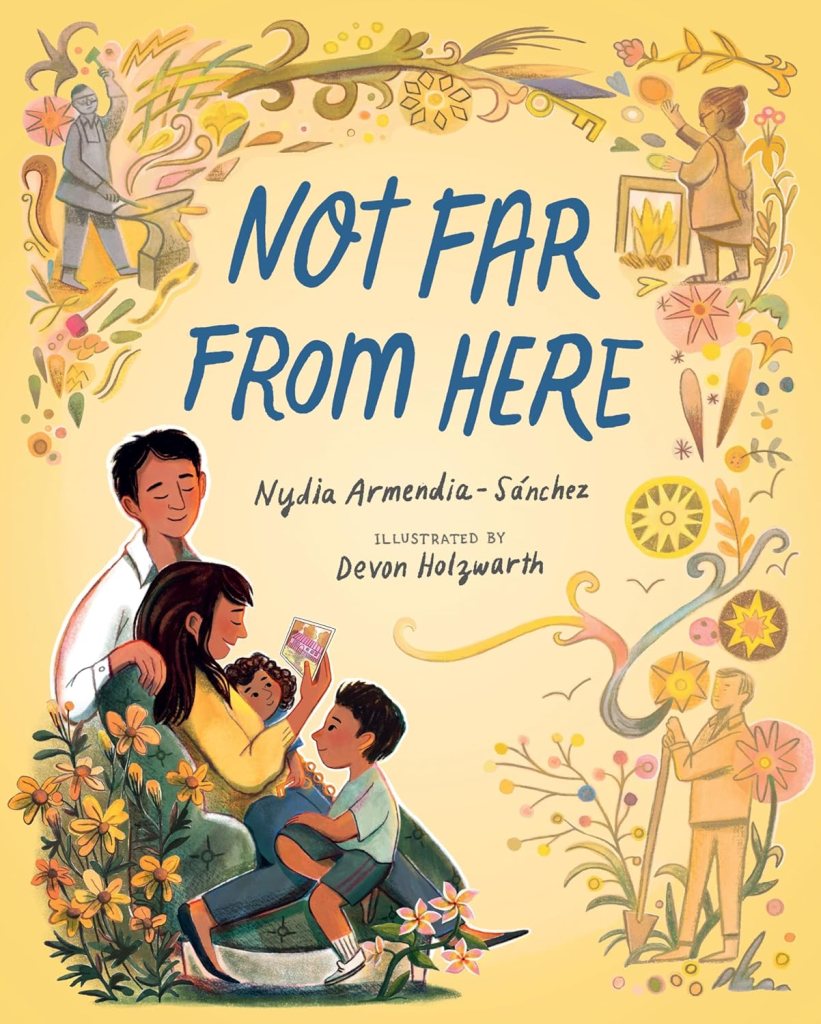
Written by Nydia Armendia-Sánchez, illustrated by Devon Holzwarth. This book seems to be in coversation with Rosen’s above. This retrospective debut picture book could be a biography for every immigrant in the U.S. Mamá tells a story to her two children about where their papá came from: a cozy casita in latinamerica, where their abuelos lived too. Their abuelo was a blacksmith & after his passing papá has trouble making ends meet for the family, so he heads to el norte. He faces discrimination, but also finds friends willing to help him out. Eventually mamá y papá meet & get married and their mamá incites their native born children:
“As you grow,
there may come a time
when you must stand up for yourself
or a friend
porque no es de aquí”
The book turns la acusación “not from here” to not FAR from here. Reminding readers that indeed immigrants are not coming from that far & could actually have things in common with native born people. The book could apply to different nations because it seems we all have issues accepting each other.
While the book is in Spanglish and obviously features brown characters, Holzwarth choses to feature a black character to be the one who is being discriminated. It may be harder for younger generations born here to realize what discrimination feels like, but given our political climate we must remember not to act on our prejudices when treating people. This is how we end up with genocide. Mamá talks about their particular “nuestra familia” but also extends the term to include la “comunidad.” Community is what we make it. We can be inclusive or exclusive, opressive or kind. Home is welcoming, mi casa es su casa.
Un libro que habla de un papá pero a la ves transmite la experiencia de todo inmigrante, espero pronto salga la traducción completa. Las ilustraciones son culturales y coloridas y transmiten la sensación de un hogar y comunidad acogedora y segura.
Eloísa’s Musical Window
Eloísa y su ventana musical

Written by Margarita Engle, illustrated by John Parra. This established & accolated duo bring a biographical picture book based on Engle’s mother. Eloísa is too shy to go outside & enjoy the music she hears from her window, and her family too poor to own a radio. Usually her mother is la parlanchina, ready to take her and her hermano out for a musical stroll, but she has been bedridden lately, only able to keep down pigeon soup /caldo de codorniz.
In the author’s note we find out that Eloísa’s mother (Engle’s grandmother) actually contracted malaria & probably was too poor to afford medicine to make her feel better quicker. Engle’s narrative makes no mention of the word however, and sticks to the yearning & ignorance of a young child who sees her mother suffering & only wishes things could go back to normal. Engle, rather, goes full circle and contributes the lively Cuban music aiding in the progressive healing of her grandmother. Eloísa finally hears live music & sees her mother dance “like a new baby horse” after finally finding the strenght.
Eloísas’ worry and love is subtle for her mother, but this book is still testament to the love for ones family and the need to record our stories before they are forgotten. Eloísa told this story to Engle at 91 years old, and Engle made sure to immortalize this happy occurrence for her mother. It is true that life and life’s pleasures are taken in with greather appreciation after hardship. El hogar es lo cotidiano, en los momentos calmados, rutinarios, que damos por aburridos.
Home is in the books we choose to keep in our houses! Although these are hardship narratives, I want to remind you that living in a stable, happy home actually breeds the most well-adjusted and securely attached children.
It does feel like we live a life behind rose-colored glasses in America, or the suburbs. Perhaps reading these stories prepare us for hardships yet to come, so that we may face them with as much resilience as our protagonists. These stories also comfort us by testifying that we do not have to go through hardship alone. Home is in community.

 Biblioterika